

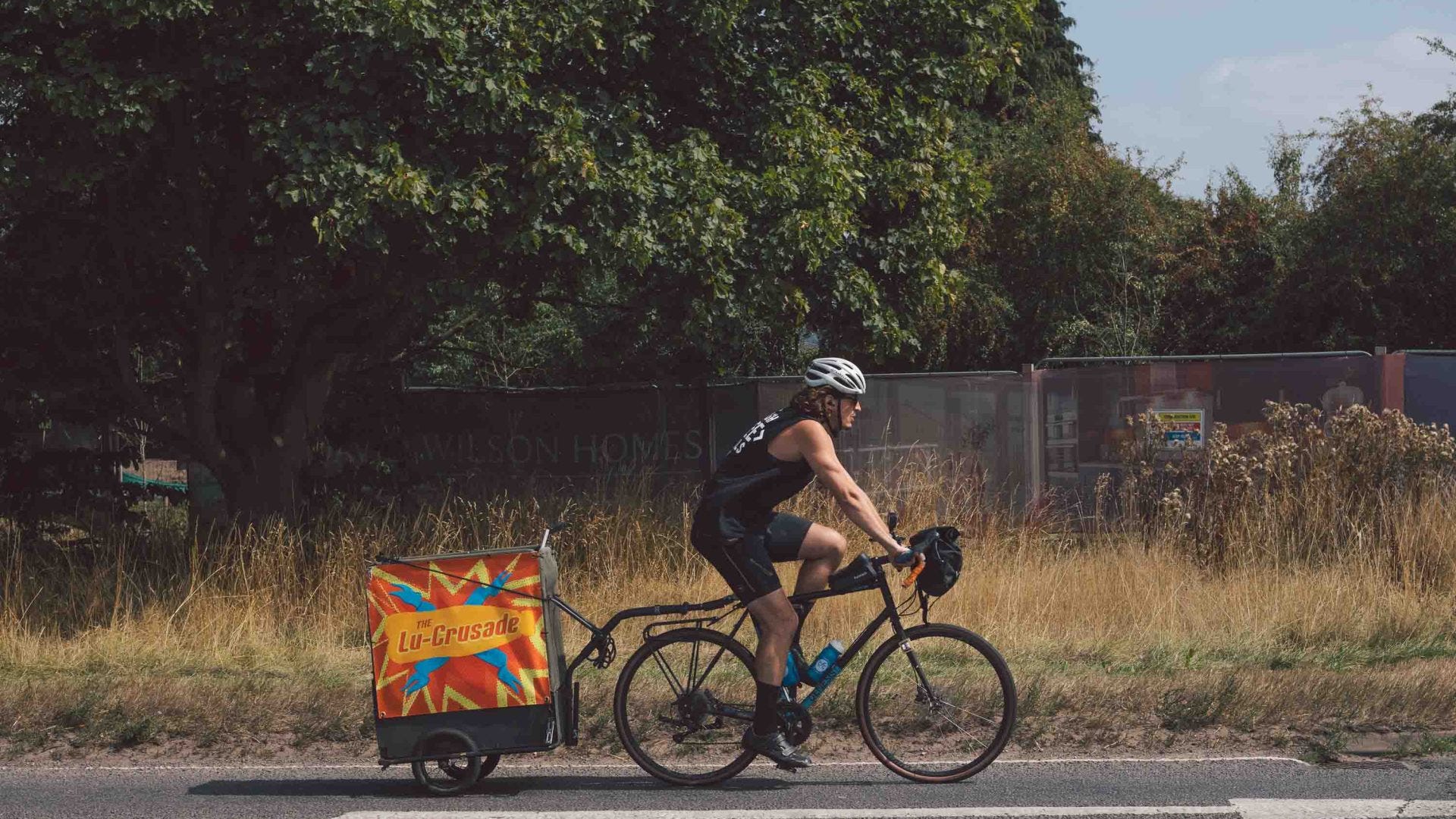
The head of sustainability at Suntory Drinks was visibly vexed when I pointed to a bottle of Lucozade in the long grass. He thought I’d planted it there, so that when the cameras rolled for our interview, he’d have egg on his face—the beloved British sports drink in question sits in his company’s portfolio. It’s also, according to one study, the most littered branded item on UK trails.
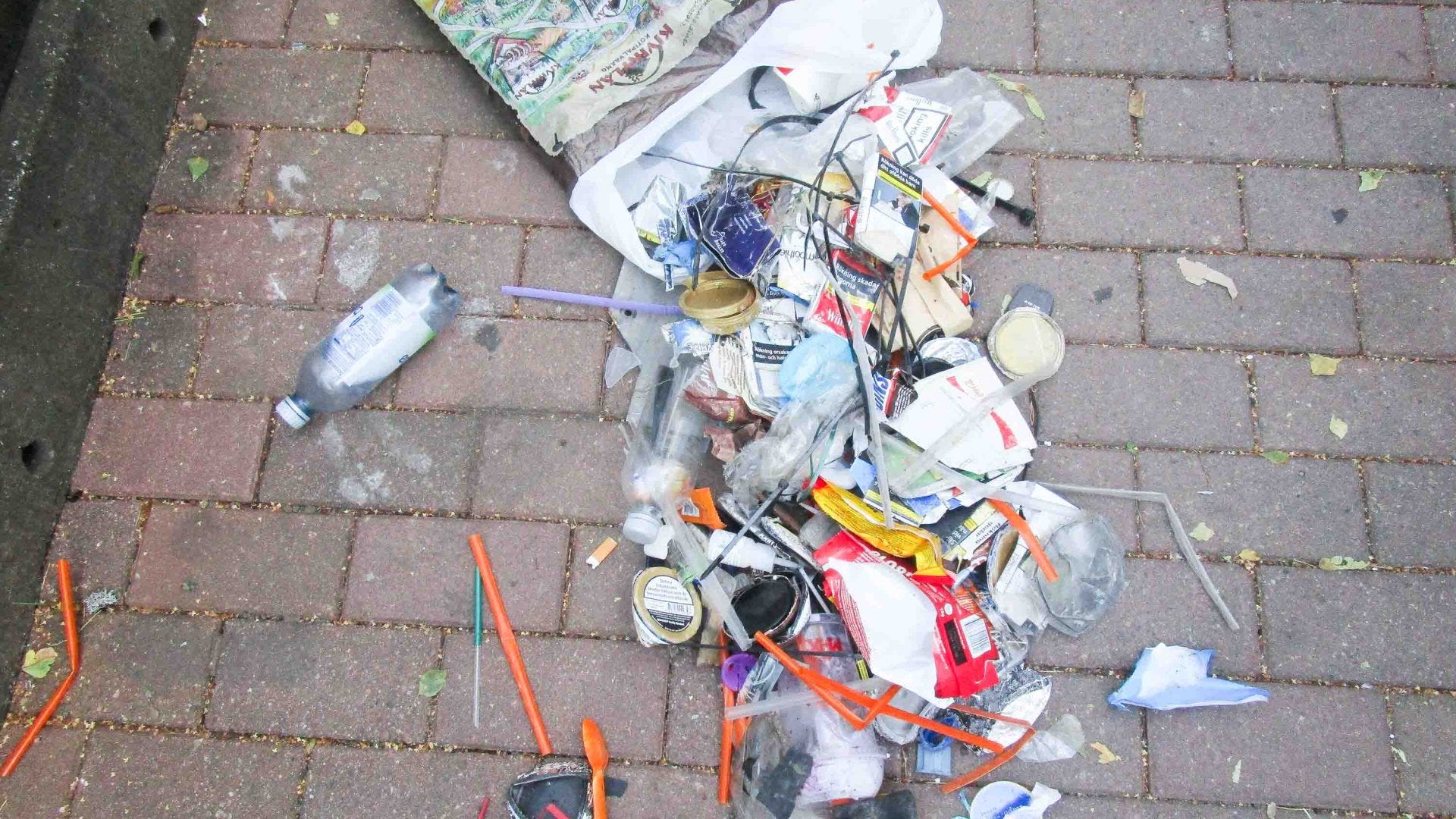
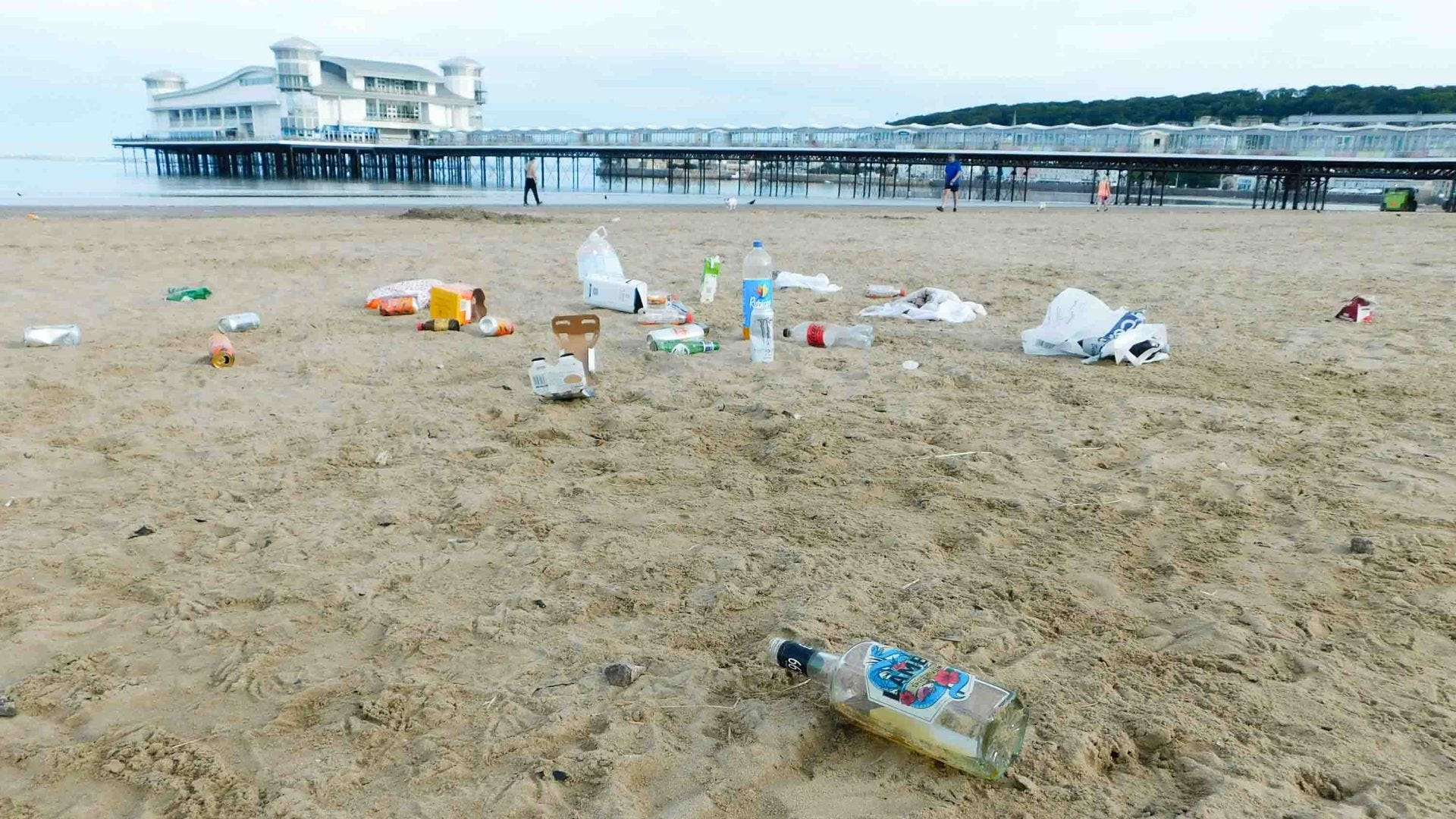
But I hadn’t planted it. It’s just one of the 700,000 plastic bottles littered across the UK every day. Safe to say, single-use pollution is a major ecological problem. Sitting in an otherwise bucolic meadow in Cambridgeshire, I wanted to know what the hell Mr Sustainability—Fraser McIntosh, on his business card—was doing about it.
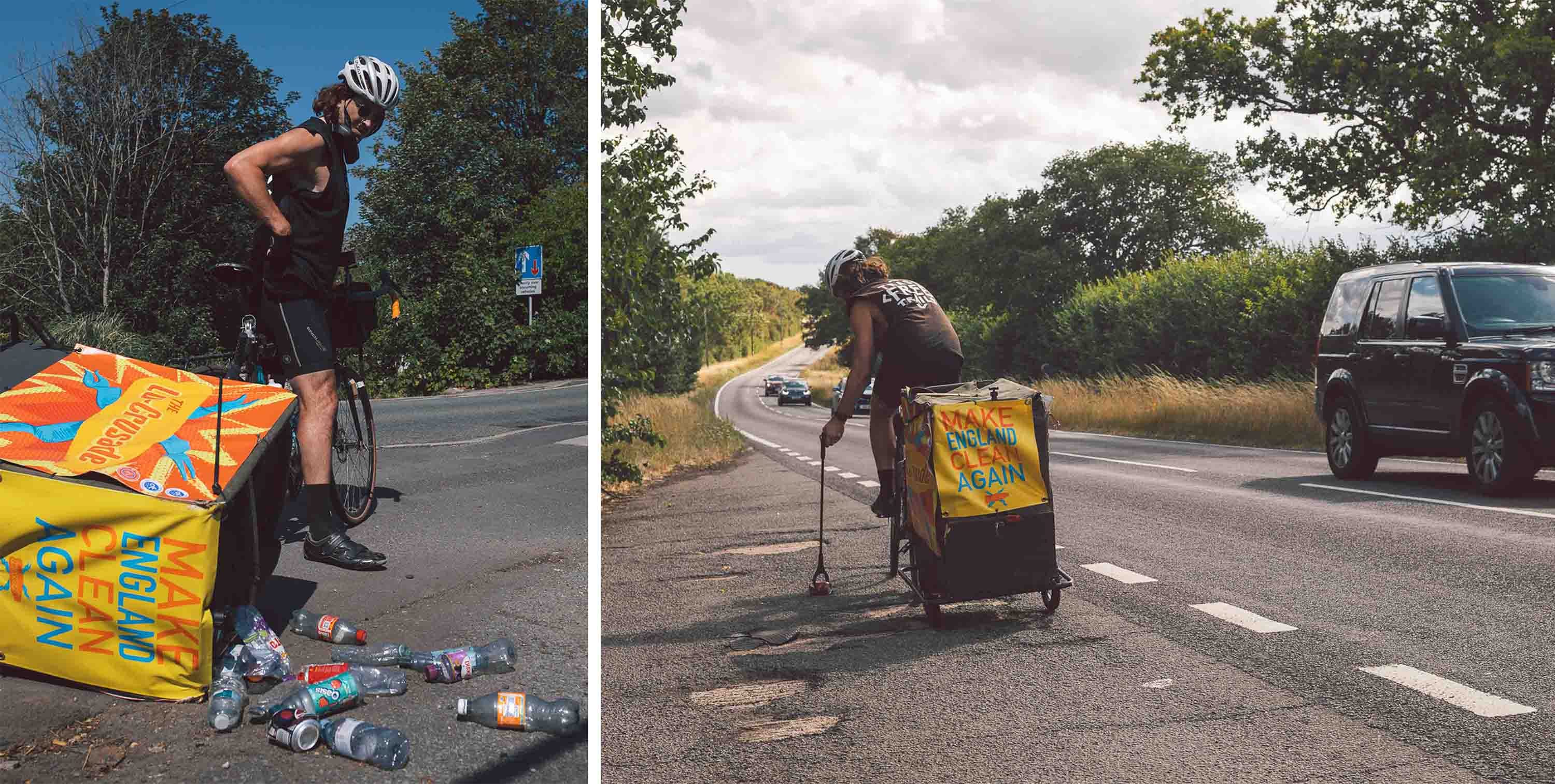
Our meeting last summer came on the penultimate day of what I’m calling the world’s longest litter pick. Guinness wouldn’t ratify the attempt—“too niche,” they said—but they did confirm there was no precedent. Either way, I cycled 1,044 miles (1,680 kilometers) over 22 days around the UK, picking up bottles and raising a few quid for Trash Free Trails (TFT), a charity tackling the steady creep of single-use pollution in nature.
The route, logged on navigation app Komoot, traced the outline of a country-sized Lucozade bottle. Starting in my hometown of Margate in Kent, I cut across southern England to Dorset, before heading north to the Scottish border, finally looping back, via London, to Kent.
The challenge was called, wait for it, the Lu-crusade.
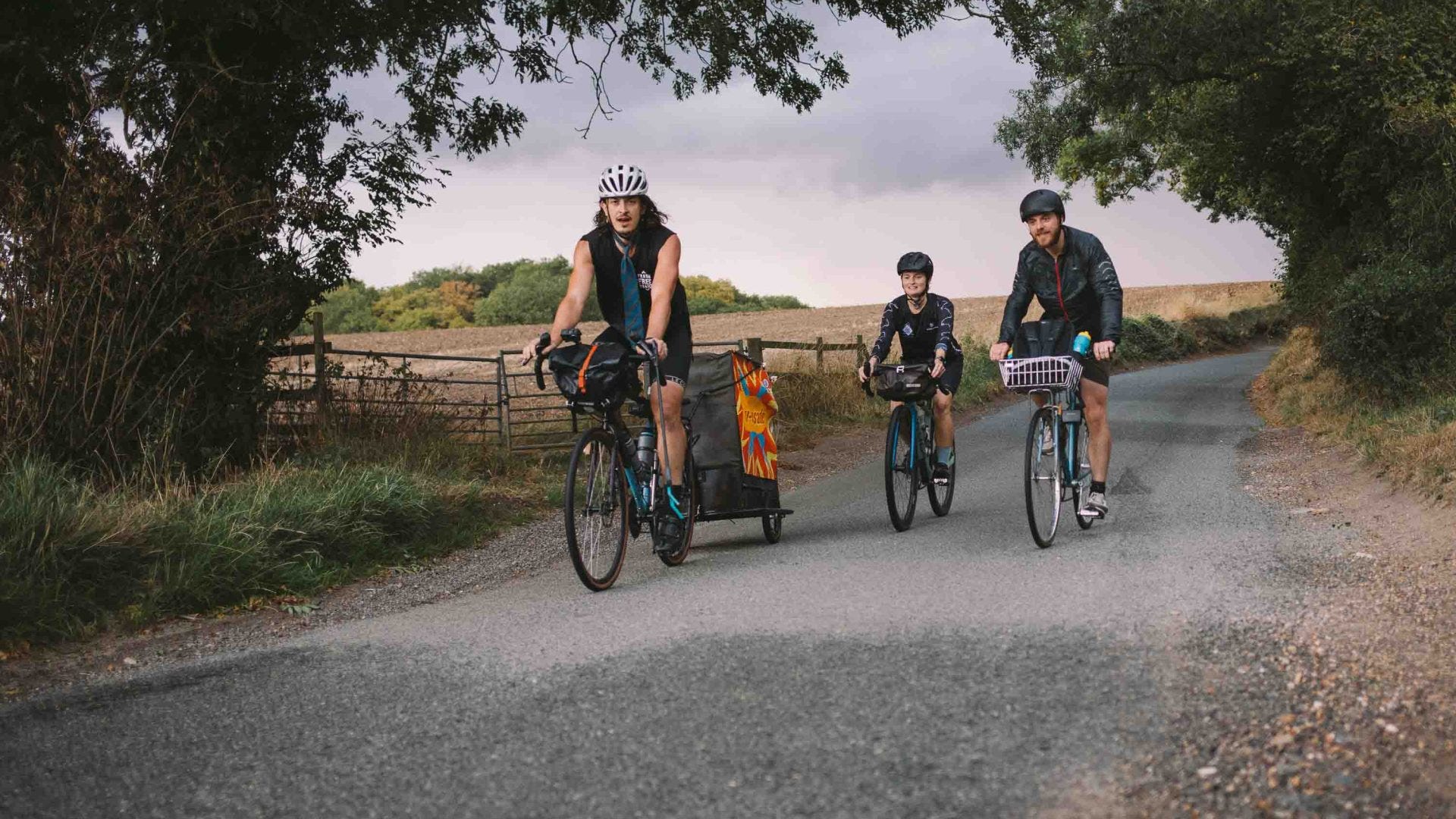
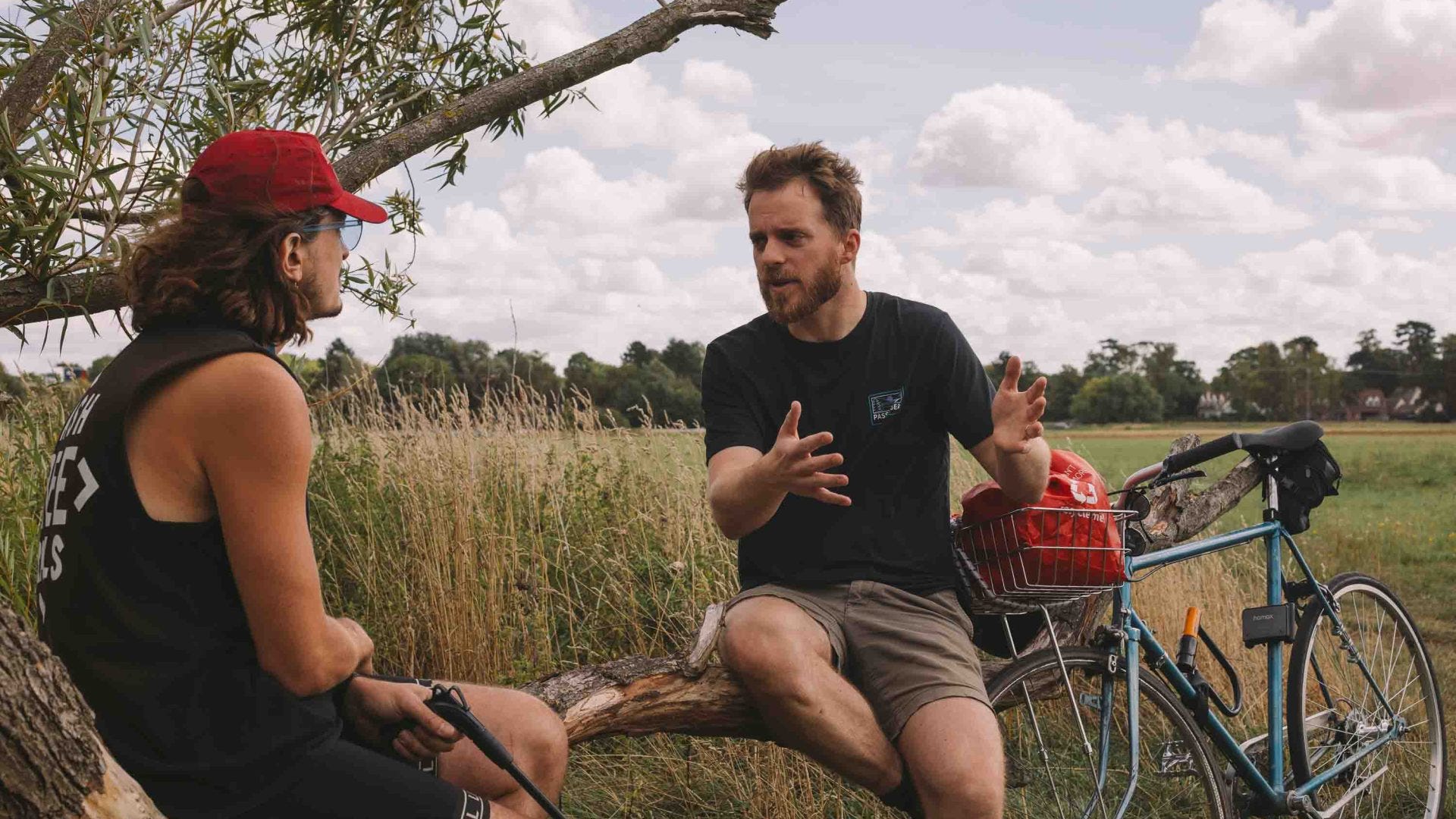
McIntosh agreeing to meet me felt bold. “This is a major reputation issue for us,” he told me. Even more surprising was his suggestion that he join me for a full day’s litter-picking afterwards. As the documentary film crew and I waited for him to arrive, I expected a Big Drinks exec with a signet ring and a handful of glib soundbites. We’d go toe-to-toe, Frost v Nixon.
The hyperfocus meant I’d forget where I was, but each bottle picked gave me a little dopamine hit, like Mario collecting a mushroom.
Instead, he arrived with his bicycle and beard and boy-next-door smile. “Firstly, let me say, we really do give a shit,” he told me. “Seeing our bottles littered out on the trails is terrible news. Every littered bottle is money lost. And it’s just horrible: This is our natural environment, too.”
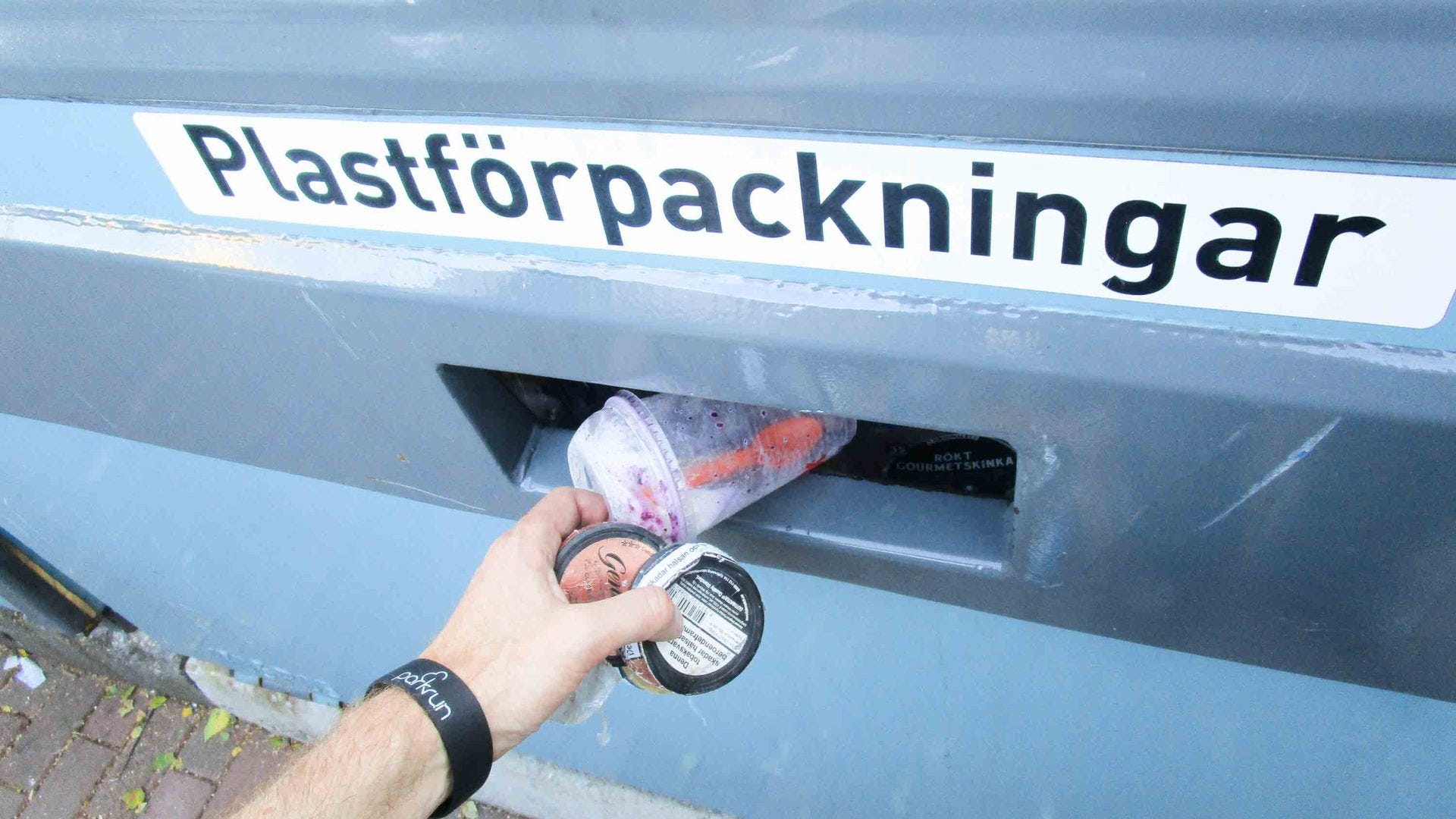
The solution, as far as McIntosh sees it, is the Deposit Return Scheme (DRS). Slated to launch in 2027, it will add about 20p (27 cents) to all plastic bottles and cans, refunded when they’re returned to a supermarket machine. Similar schemes abroad have been effective: Ireland collected a billion containers in its first year.
Earlier in the ride, I’d spoken to Sarah Horner, who helped design the UK’s DRS policy. She thinks the system will achieve a whopping 90 percent return rate, based on polling and similar return rates in other countries. I asked her why she thought the UK had taken so long to adopt the scheme. “Lobbying,” she told me. “The cost of setting up the scheme is enormous and there are competing pressures from industry groups, retailers and government.”
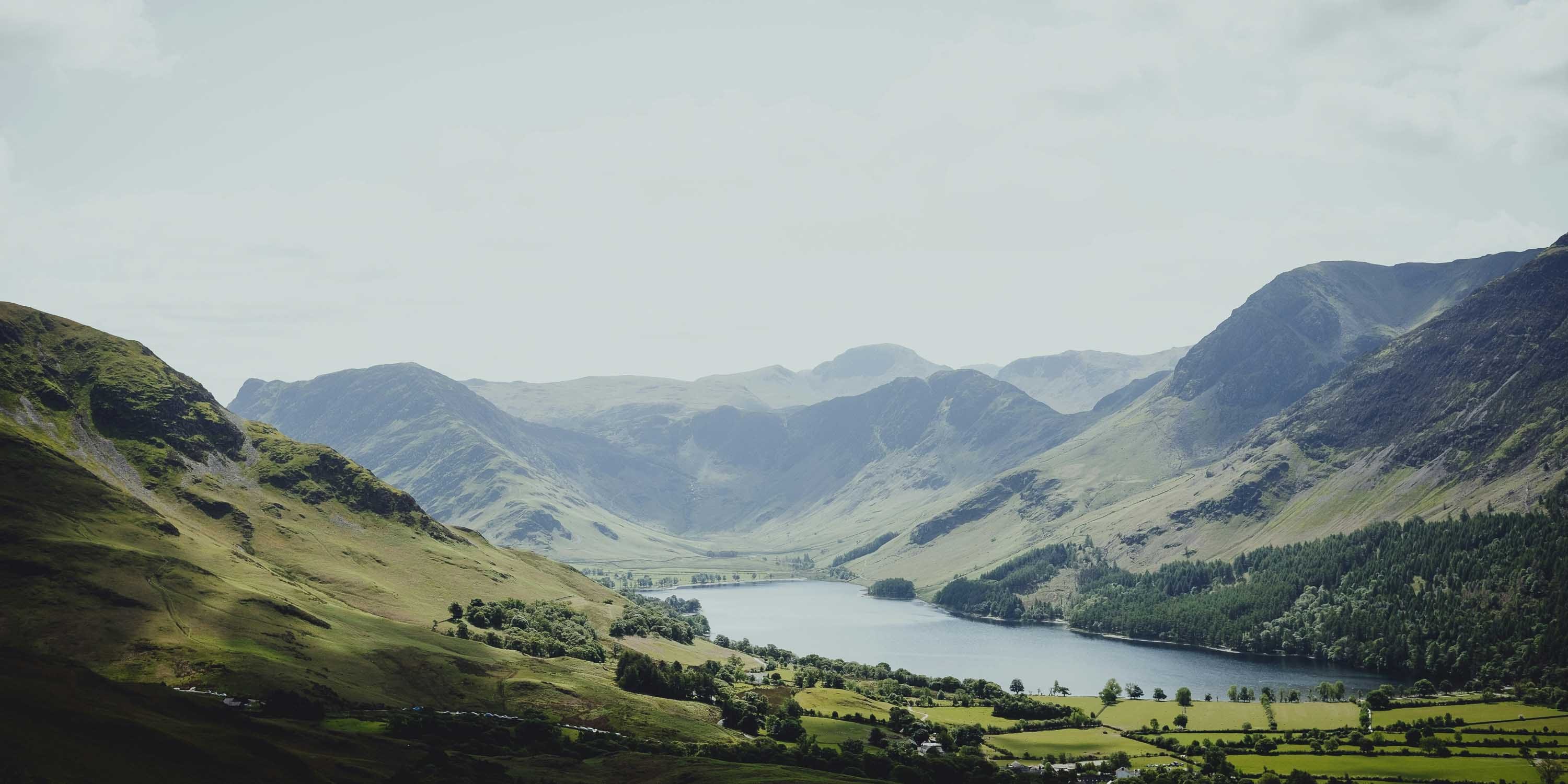
Speaking of pressure, that same day my bike’s rear brake caliper snapped off and there was no hope of fixing it. I now had one brake to tackle the Lake District—and Scotland. That was the first in a long line of mechanical failures—I’d counted over 20 punctures so far, mainly on my trailer. Made of flimsy material, I had my handiest friend, Dom, add steel, wood and tarpaulin until it looked plausible.
But appearances deceive and within 45 minutes of departing, one of the trailer’s tiddly wheels rolled off down the road. That happened another 10 or so times before the rim finally collapsed. A passing white-van man took pity and delivered the wreck to a charity bike shop near Bristol. Three superheroes fixed me up with new wheels—pinched from a toddler’s trike—and refused to accept payment.
Between the drama, sweat and interviews, I still had to pick up bottles. As many as possible. The dilemma was which ones to stop for and which to leave behind. I set a rule: Only collect what I could grab without putting my feet on the ground. Poor-man’s polo.
Spending entire days staring into hedges induces a special sort of delirium. The hyperfocus meant I’d forget where I was, but each bottle picked gave me a little dopamine hit, like Mario collecting a mushroom. I began talking to them, the bottles, imagining their delight at being rescued and promised reincarnation.
Sanity was found, ironically, at the bottom of a glass. Every evening, I’d look for a restorative pint in a pub and stay there, in the warm, until they kicked me out. More than once, a local took pity on me, offering a room and a shower. One evening, near the town of Scunthorpe, eastern England, I ended up in an army veteran’s hot tub drinking prosecco.
Speaking to Middle England, one thing was clear: A loathing of littering is something we can all agree on. So why do we do it? Shortly after my interview with McIntosh, Rachel Coleman, communications manager at Trash Free Trails, explained that it’s rooted in a “profound sense of disconnection. From nature, from community, from self.”
The act of littering, often seen as aggressive, is actually thoughtless, reflecting a fracture between us, the single-use pollution that permeates our everyday lives, and the impact it’s having around us. As we set off, I realized I’d felt that same disconnection myself—and the attrition of wellbeing that comes with it. A chance meeting two days earlier had pointed to litter picking as an antidote.
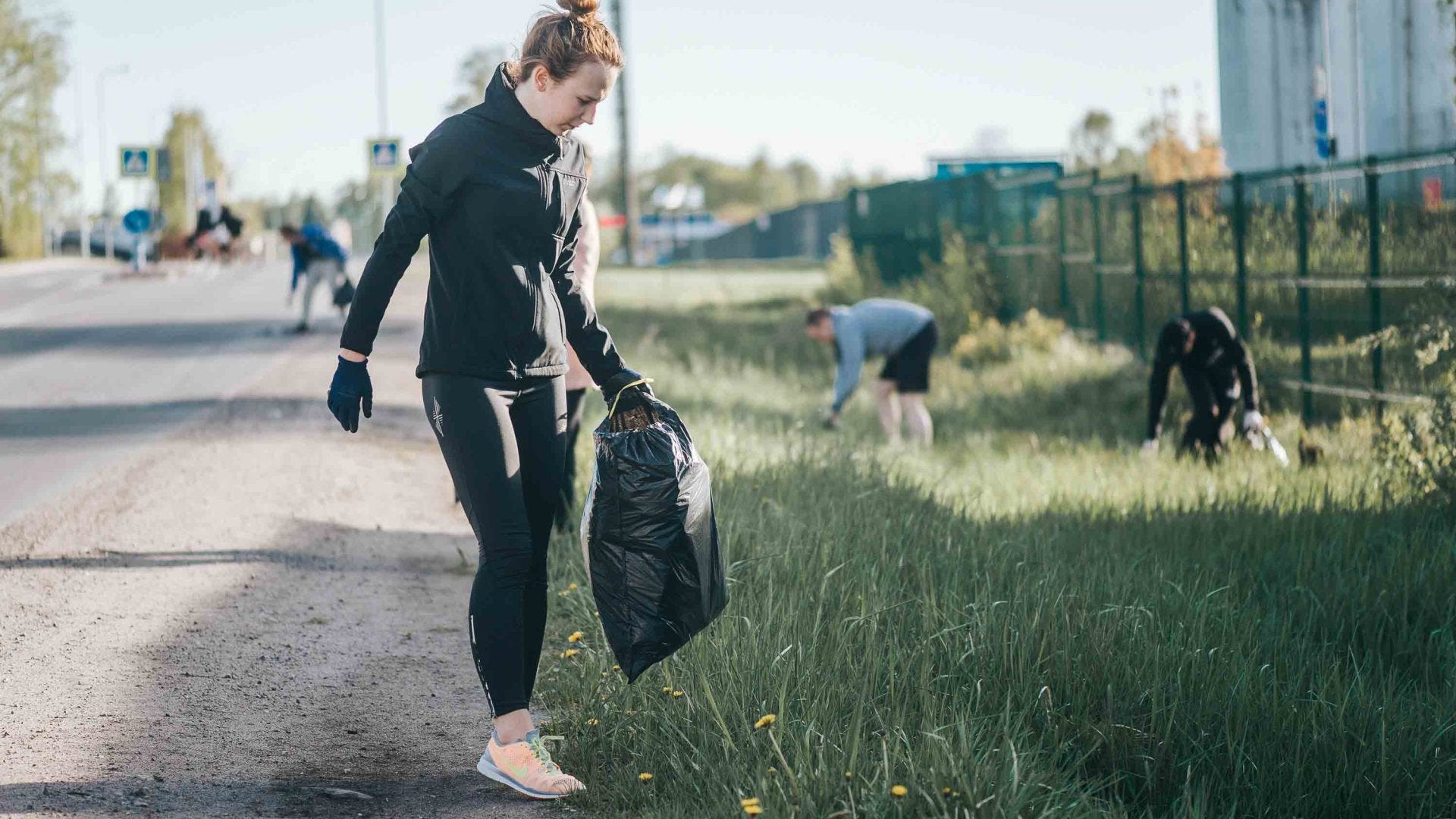
Wayne Gammon, who set up the Bloomin Wombles in Broughton, Lincolnshire, told me litter picking became a coping mechanism after his son died by suicide in 2004. What began as a way of getting out of the house has since grown into a small civic network: Junior Wombles, retirees and regular volunteers, many with their own adopted routes through town. [Wombles are fictional characters famous for living on Wimbledon Common and recycling litter].
“People in cities are disconnected from nature. There’s huge demand to be outdoors, but very few chances to learn how.”
- Eben Muse, British Mountaineering Council (BMC)
Gammon sees litter picking as good for both body and mind: “A reason to walk, talk and feel useful,” he said. On who to blame for litter, he avoided the usual tropes. “People like to point at kids,” he said, “but much of what he picks up comes from passing cars.”
Another novel solution is to gamify litter picking. On the final day of my ride, I met Sarah Parry, a former Spogomi World Champion. The sport, invented in Japan, turns litter picking into a timed contest where teams race to collect rubbish for points. Sarah and I battled it out for 15 gruelling minutes. Being a woman of grace and magnanimity, she allowed me to win.
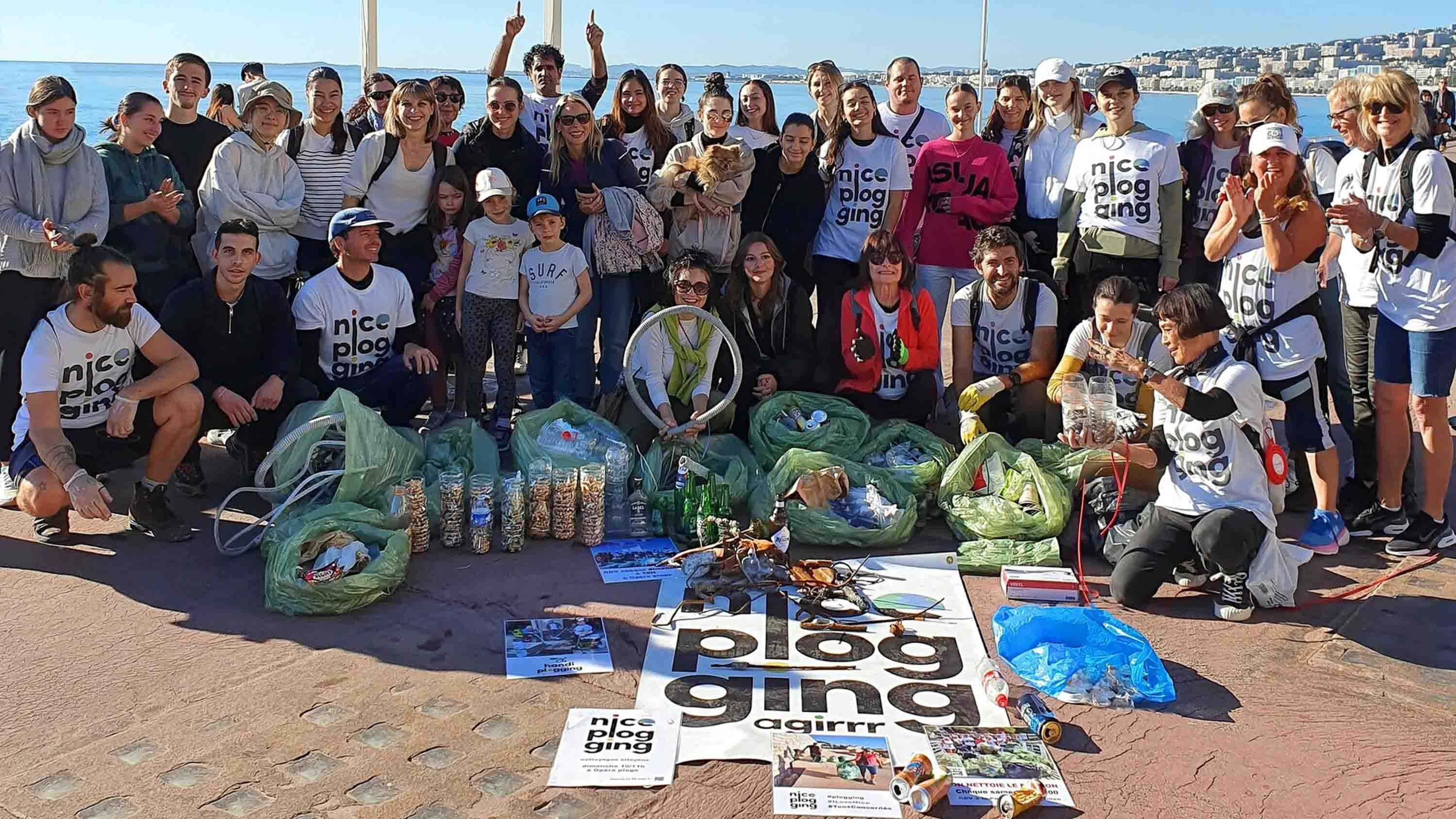
Similar ideas are popping up around the world. In Sweden, “plogging” sees runners pick up litter as they jog (the name originates from the Swedish verb ‘plocka upp’, to pick up) and spread to other countries in 2018, following increased concern about plastic pollution, while the Litterati app turns every piece collected into a datapoint for a global clean-up leaderboard.
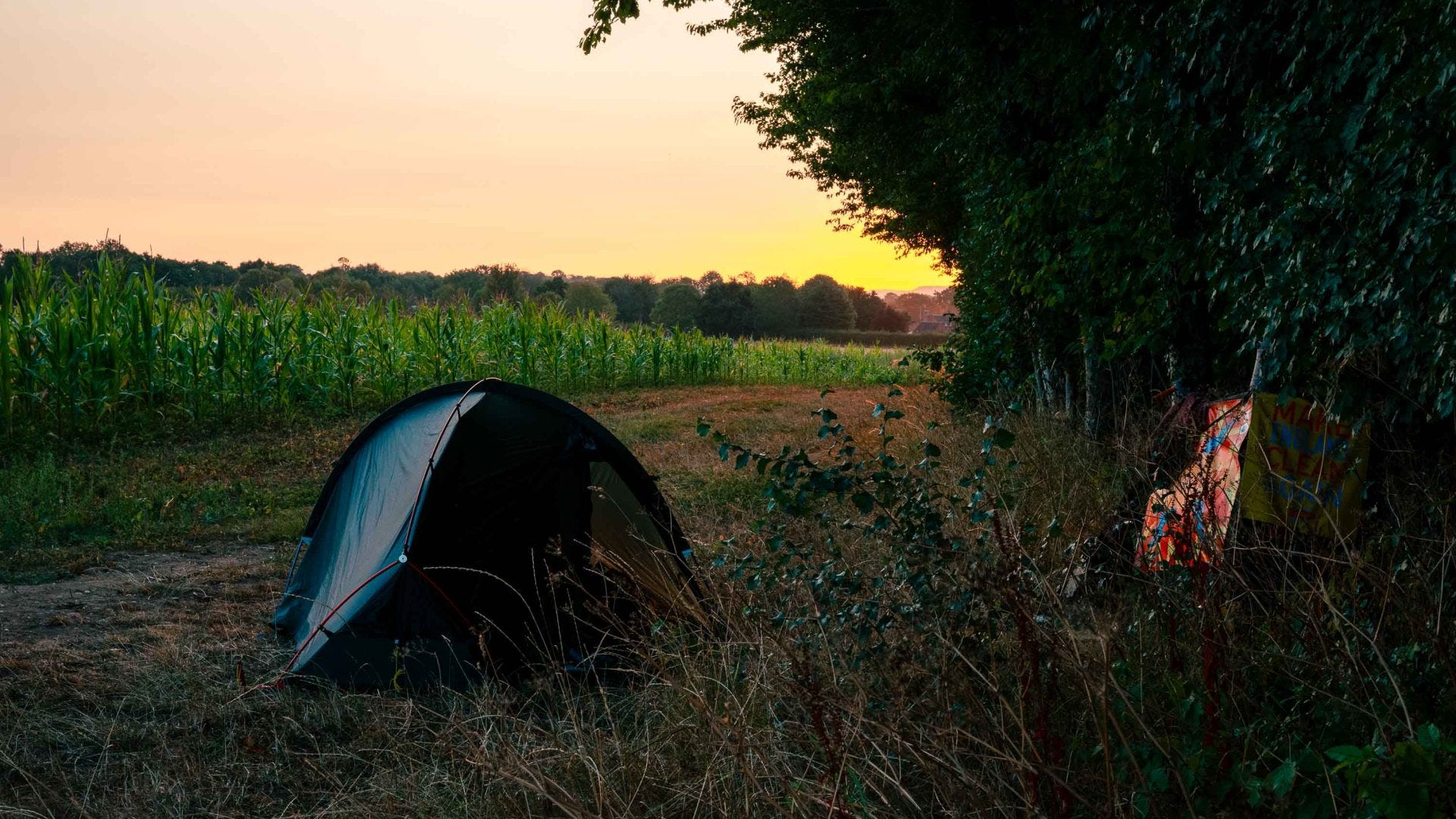
Of all the anti-litter advocates I met on the way, Adam the farmer is the one I remember most vividly. It was at the end of day eight, and I was lost in the folds of rural Worcestershire, eyeing up places to set up camp with Eben Muse from the British Mountaineering Council (BMC) who writes and campaigns passionately for conservation and greater access.
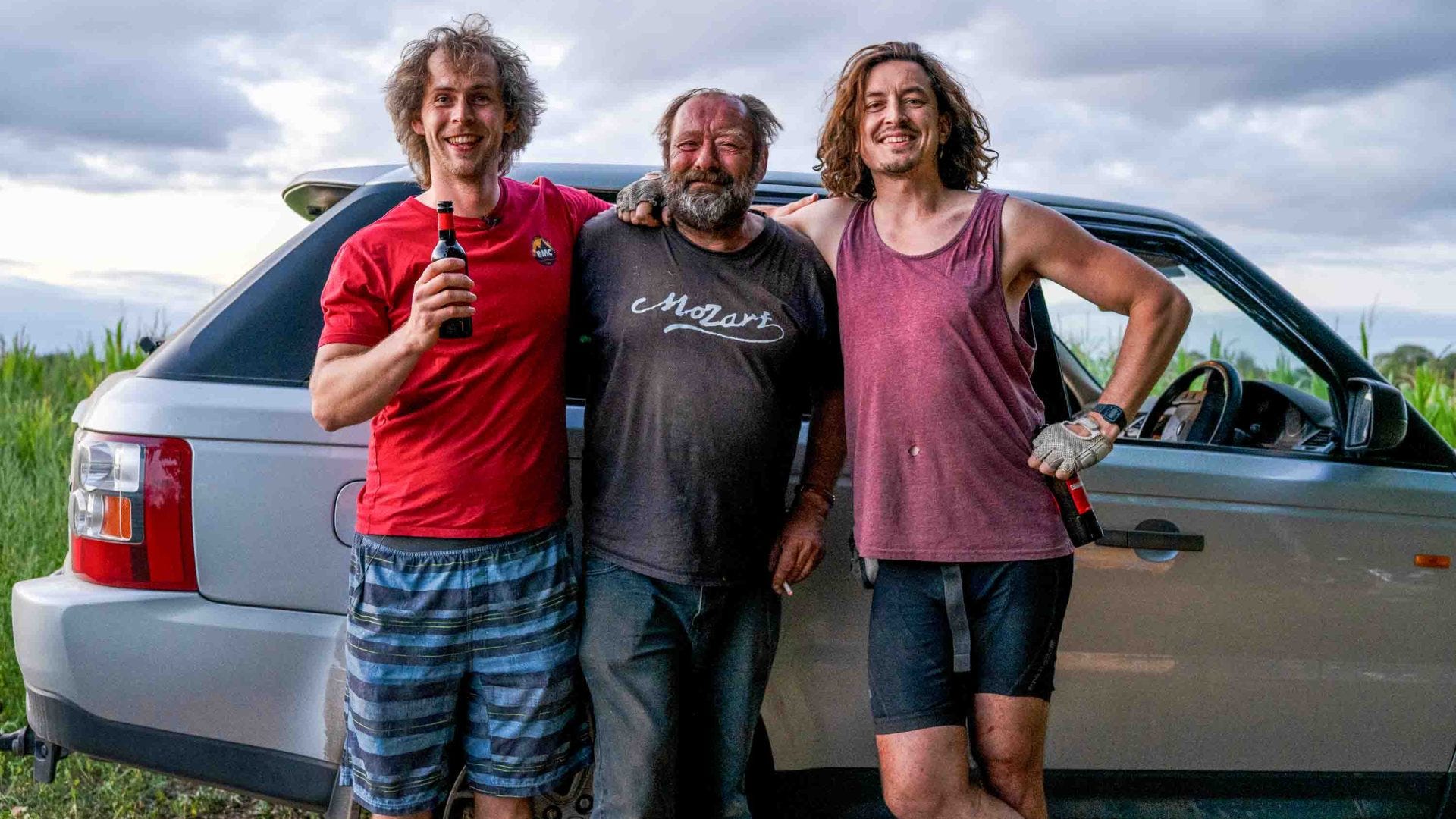
On this day, though, it was Muse’s wild camping skills I wanted. He agreed to spend the night with me, sharing etiquette tips on what remains a contentious activity in England. Within seconds of me setting my bike down in a field, a Range Rover appeared. Adam stepped out. “You look like a bloody Neanderthal. Or Jim Morrison,” he said. “Get your hair cut!”
It quickly became clear that Adam was one of the good guys. I explained what I was up to. “I’m OCD about litter on my farm,” he said. “Here’s £20 (USD$26) for the cause.” He left only to return with ice creams and beers. Incredulous, Muse and I pitched our tents and drank victory lagers around his camping stove.
Wild camping—permission-free, in an undesignated place—has been in the UK news lately, particularly on Dartmoor National Park, the only place in England where it’s legally permitted. Landowner Alexander Darwall challenged that right in court, but the Court of Appeal ultimately upheld it. Everywhere else in England and Wales, campers can be asked to leave (Scotland, by contrast, has had the right since 2003). Despite that, the British Mountaineering Council advocates responsible wild camping.
“Follow two simple rules—don’t disturb and don’t destroy—and you can’t really go wrong,” said Eben, wolfing down a pot noodle.
He thinks the bigger issue is access: “People in cities are disconnected from nature,” he said. “There’s huge demand to be outdoors, but very few chances to learn how.” Without that on-ramp, people are more likely to misuse the countryside—lighting fires, leaving rubbish or simply not respecting the places they’re visiting.
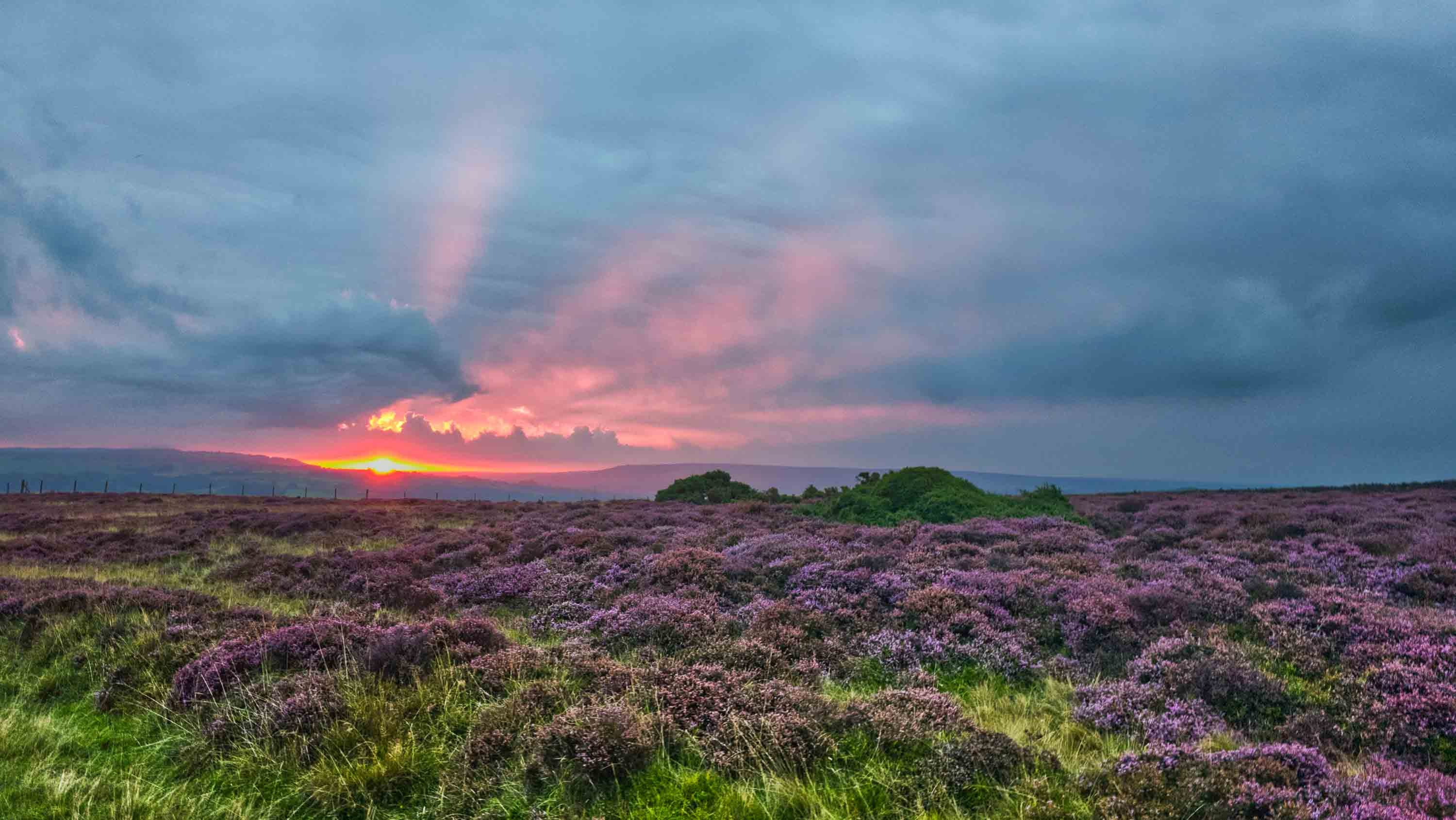
The toughest, most beautiful stretch of the ride crossed the North York Moors, a single gravel track scribbling over Wuthering Heights hills. Midway, my rear tyre exploded and I limped 10 miles on a flat. At that moment, feeling a little crestfallen, I wondered why I was doing this at all. With so many graver crises in the world, was litter really the best place to spend my energy?
Rational thinking resumed following a family-sized pizza at the end of the ride. I realized that picking up litter, particularly in a beautiful place, was a powerful act. Firstly, it helped me to emotionally connect with the land I was passing through. But also, more broadly, it mitigates the feeling of helplessness I can feel at the state of the world.
In the end, the Lu-crusade reshaped my idea of adventure. Type-3 fun, I call it: Rewarding not only for its difficulty but for the reciprocity between you and nature. I floated the idea to Lucozade’s McIntosh as we cycled towards London. He laughed. “You and your Lu-crusade might be a headache,” he said, “but I haven’t had this much fun for a while.”