


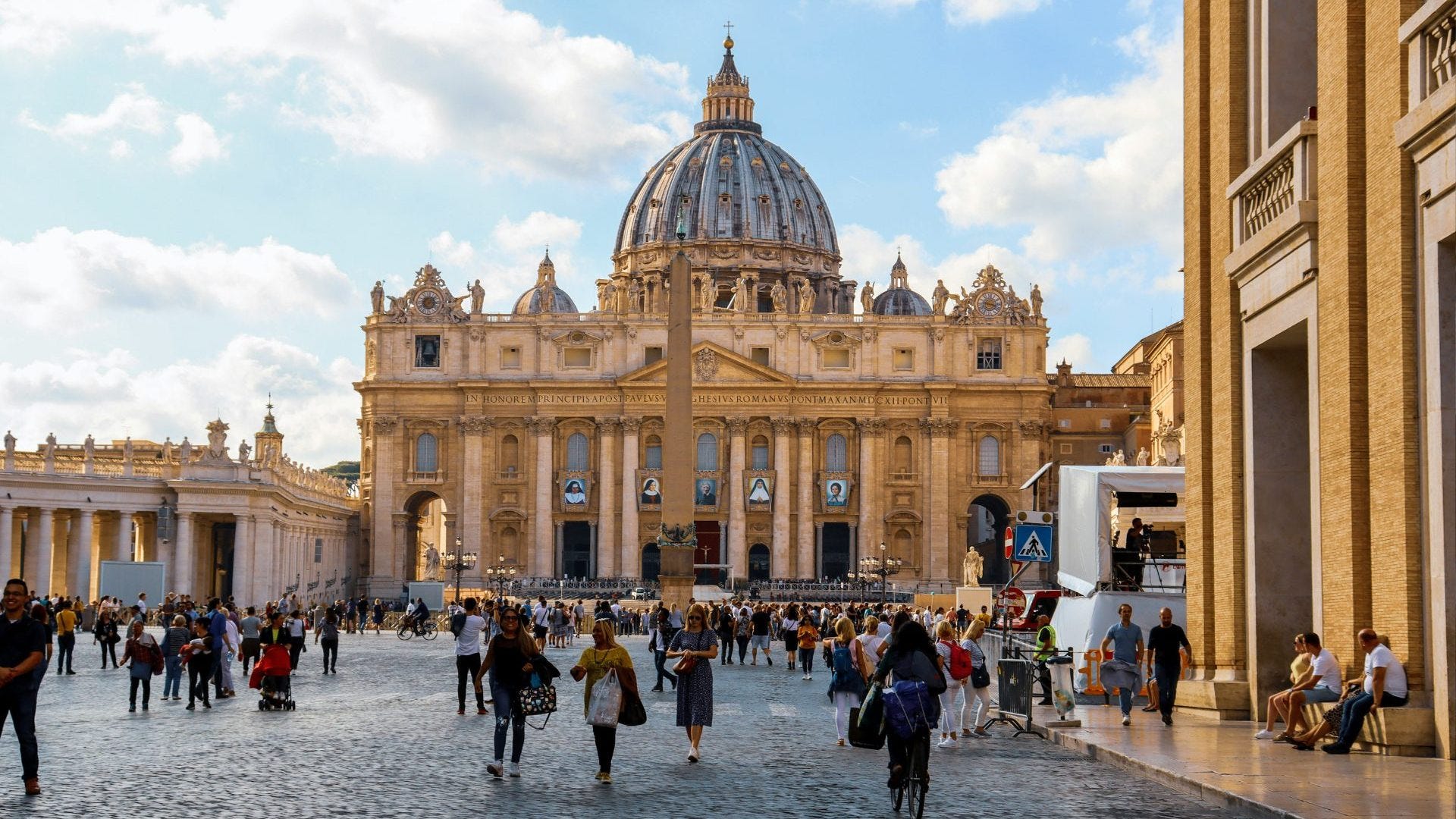
An American pope. An award-winning film. A jubilee year. The Catholic church has been in the spotlight recently, so writer Damien Gabet decided now was the time to trek a section of the Via Francigena pilgrims trail which leads all the way to Vatican City.
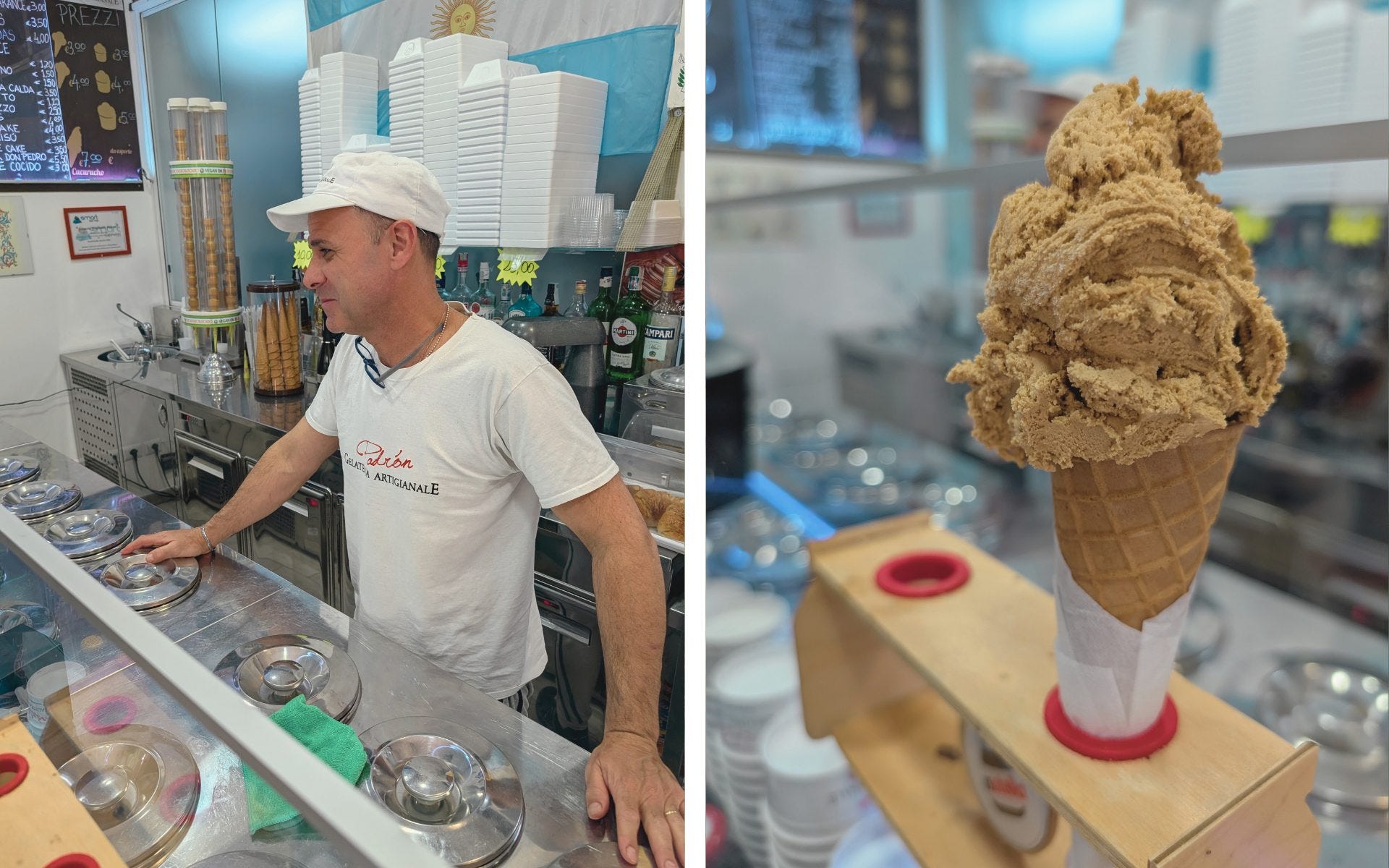
Pope Francis never hid his sweet tooth. Nor that his favourite ice-cream was dulce de leche. A caramely Argentine staple, it reminded him of home. To the faithful, it was semaphore for his down-to-earth nature, refreshingly at odds with the gilt grandeur of his office.
During his 12-year tenure as Christ’s ‘man on the ground’, Francis’ favorite place to get a cone was the unassuming Padrón Gelateria Artigianale, tucked away behind the Vatican. Owner and fellow countryman Sebastián Padrón prides himself on making really good gelato.
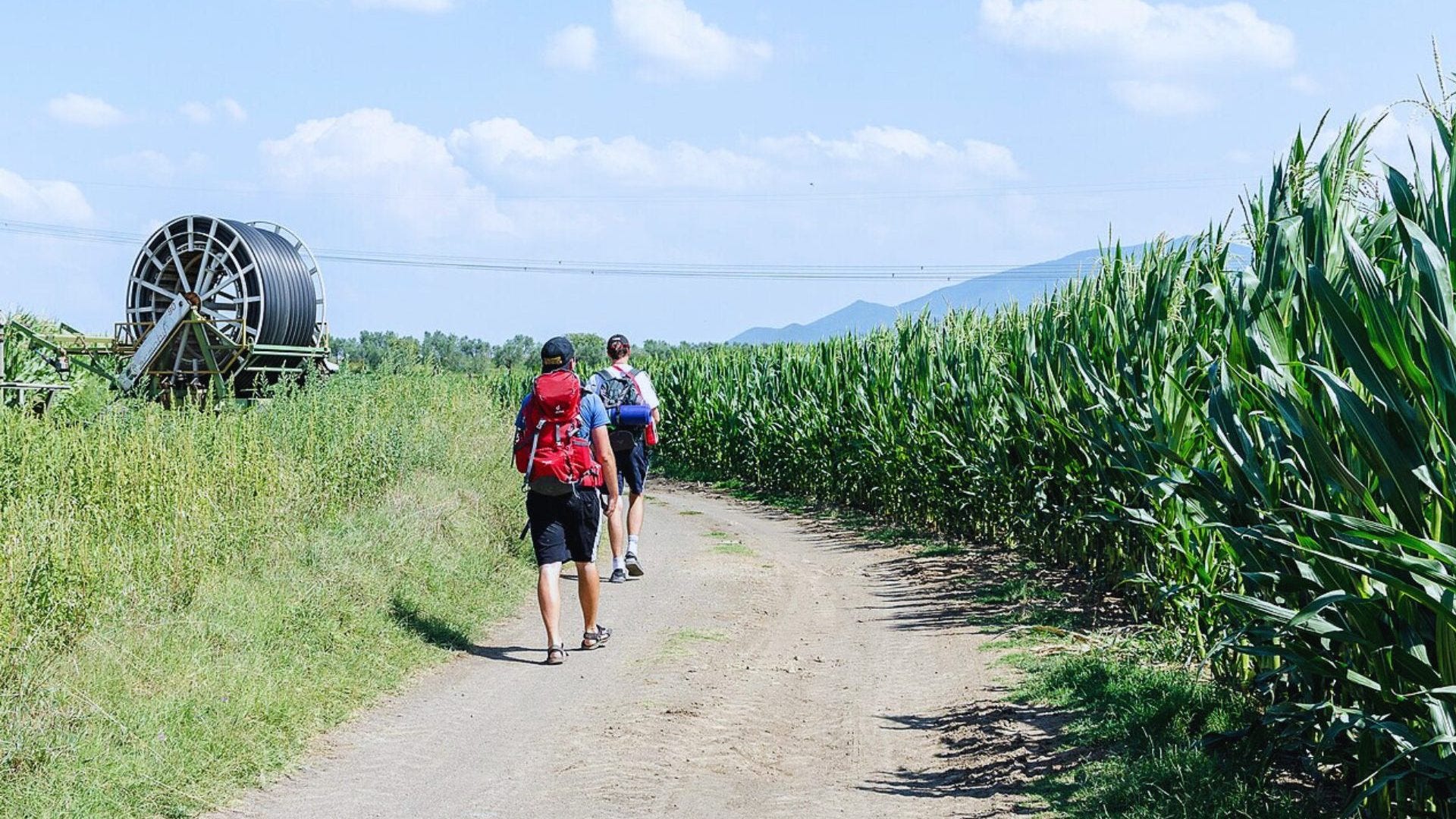
I know because I went to try some recently. It made for a celebratory treat as I, and a group of Italian ramblers, completed a 30-mile (50-kilometer) section of the Via Francigena. A millennium-old pilgrimage, it begins in Canterbury, England and scribbles its way over some 1,200 miles (2,050 kilometers), through Champagne’s vineyards, Alpine passes and Tuscan hills, ending at the steps of St Peter’s Basilica, Vatican City.
It feels like the Catholic church is having a moment. New pope, new movie (the award-winning Conclave) and a rare Jubilee year. So now felt like the right time to play pilgrim.
Our stretch began in Castel Gandolfo, southeast of Rome, home to the Pontiff’s summer palace. Francis never visited the place—too swanky for the “pastoral pope”—and instead opened it to the public in the mid-2010s. If you go (it’s an easy 40-minute train from Roma Centrale) the thing to see is its backyard.
Slow-grown in volcanic soil, the strawberries are outrageously fragrant and sweet. We paused for coffee and silently snarfed perfumed tartlets piled with tiny red jewels. My kind of communion.
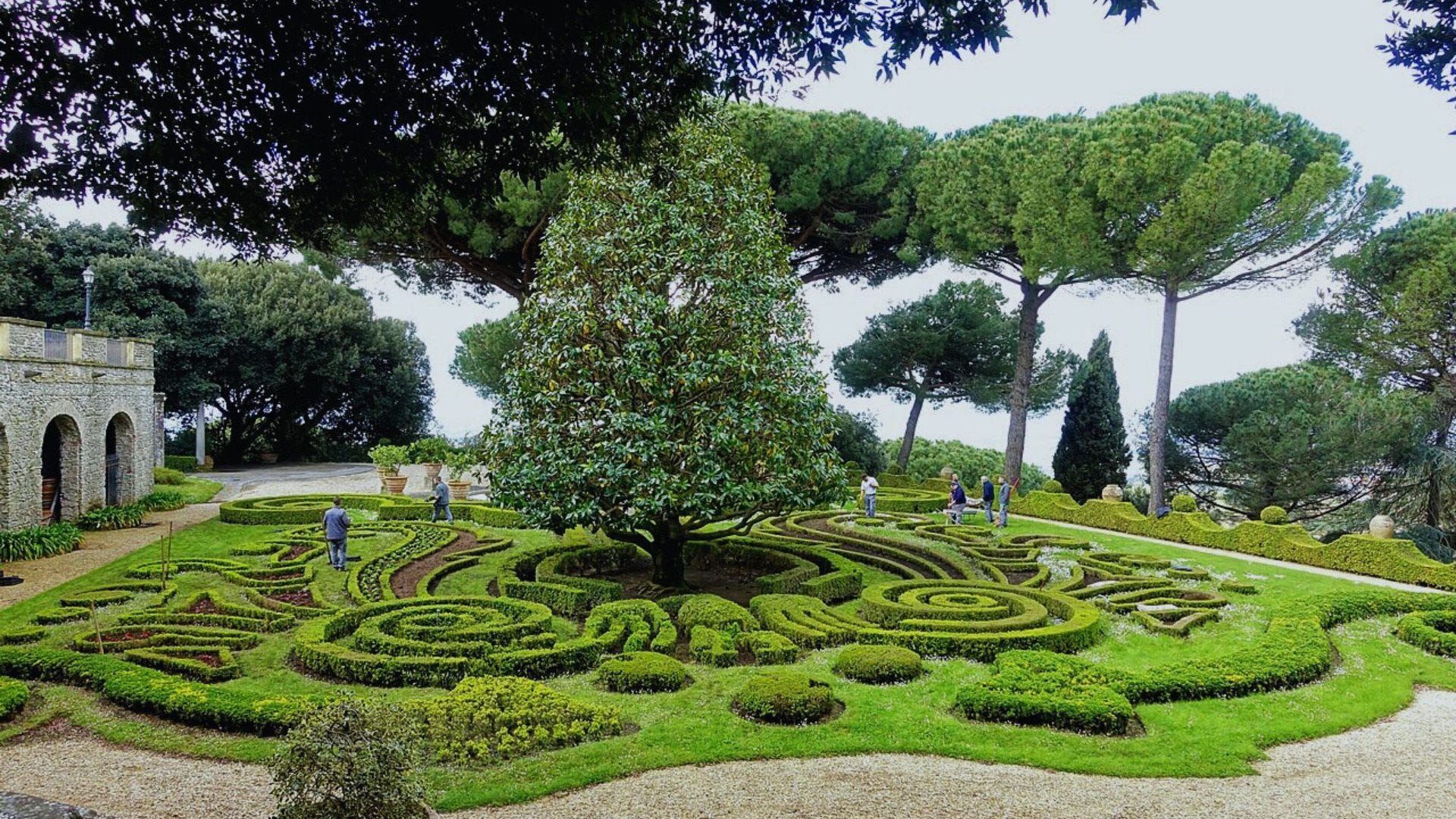
Like a renaissance canvas rendered in leaf and light, the Barberini Gardens are silently sublime. Set-square parterres and rows of umbrella pines lift the ruins of Emperor Domitian’s villa to verdant divinity. Imagine my face when I was told there wasn’t time to see it beyond a moment’s peaking through a small gap in the gate. My own little camera obscura. “We’ll check out some other amazing stuff though,” Tullia Caballero, our host and guide, told me.
She was right. We began our walk through the woodlands circling nearby Lake Albano where water fills the caldera of an extinct volcano and its slopes are cloaked in mature beech, chestnut and holm oak. “Its rising waters were once read as an omen, a sign that Rome’s fortunes hung in the balance,” said Tullia.
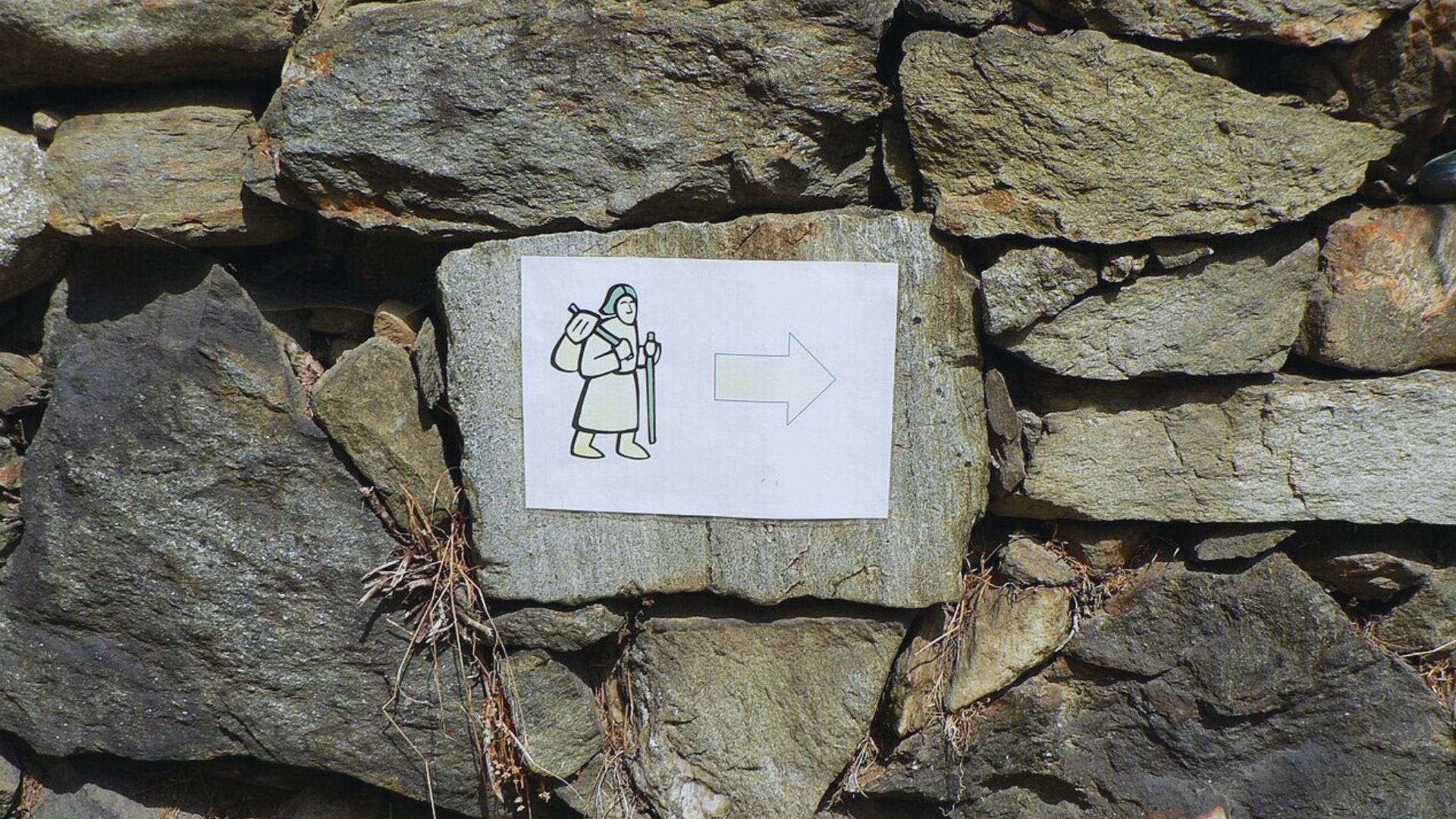
The area falls under the Castelli Romani Regional Park and is patrolled by rangers in smart green uniforms. They’re on the front line against loggers, fires and other human mischief. “Italy’s not without its problems,” said Tullia, “but the protection of our forests is something I’m proud of.” Indeed, 39 percent of Italy is covered in trees. In the UK, where I live, only 10 percent is forested.
As I admired the 1,800-year-old Roman flagstones that pave parts of the trail, Tullia explained that the Via Francigena route was first recorded much later in 990AD by the Archbishop of Canterbury, Sigeric the Serious, on his journey home from Rome.
Its modern incarnation is surprisingly young. After centuries of neglect, it was pieced back together in the early 2000s by a patchwork of councils, volunteers and the newly formed European Association of the Via Francigena. The self-styled ‘Group of 12’ are a band of old-boy volunteers whose efforts have brought this stretch of the Via back to life.
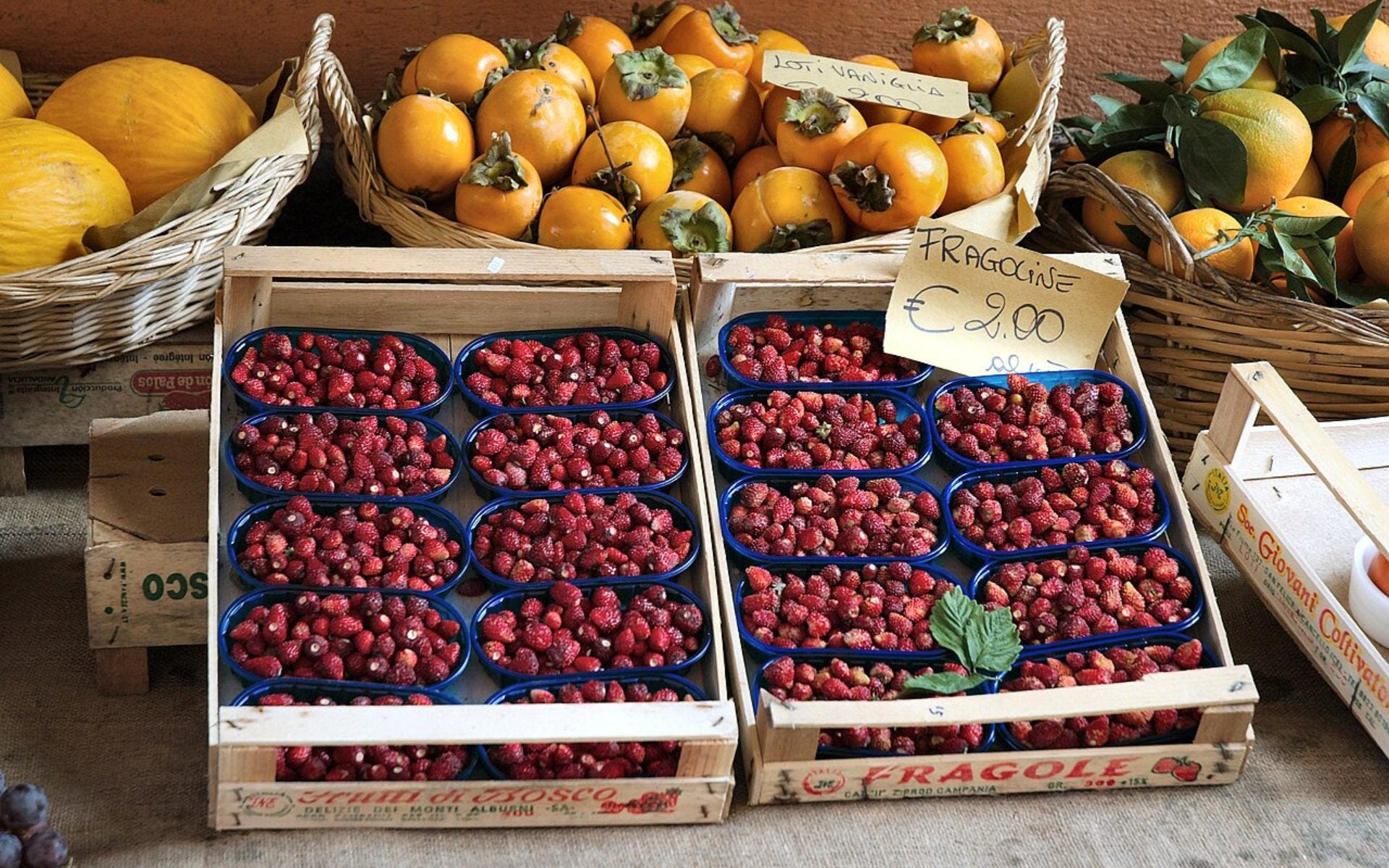
Our first stop, roughly 10 miles (16 kilometers) down the track, was in the chocolate-box village of Nemi, still a good 20-miles south of Rome. It’s famous for its wild, alpine strawberries. Slow-grown in volcanic soil, they’re outrageously fragrant and sweet. We paused for coffee and silently snarfed perfumed tartlets piled with tiny red jewels. My kind of communion.
In the lead-up to the trip, I watched Conclave. A taut, beautifully shot drama that cleaned up at the BAFTAs, the film tracks the scheming and intrigue of the Catholic church when the throne falls empty. It reminded me that in an age of digital predictability, the lore and stories of Catholicism—transgressions notwithstanding —still manage to tickle my agnostic mind. Angels, white smoke and miracles: They all hold a figurative flame to mystery in a way that provides respite from the grind.
Italy, in general, loves to live in its own myth. To us, its sultry romance with food, landscapes and language feels like a tonic to modernity. I’ve always enjoyed how fiction can deepen one’s immersion in a destination.
Our next viewpoint was my favorite: The Vatican, up close, but from behind. I’ve been a few times but, like most people, have always arrived on Mussolini’s Via della Conciliazone to a gauntlet of tourists and selfie-sticks. It’s enough to make you an atheist.
Speaking of tonics, we stopped a little early that day to drink wine with Carlo Attisano, Pope Francis’ personal sommelier. He’s now the face and resident raconteur of Colle di Maggio wines at their Lazio vineyard. The vineyard is near Velletri, further south on the Via than our starting point, so we cheated and traveled by taxi.
The wines here are a little iconoclastic: Local fiano is mixed with chardonnay for the white blend while a syrah-merlot (both French varietals) red thumbs its nose at Lazio’s usual ingredients list.
As we sipped his ‘sapid’ (mightily nice) wines, I asked him what the Pope liked to drink. “He’d try a little of everything I presented—out of politeness, I think,” he said. “But mainly, the holy father liked orange juice.” The day before, Attisano had been serving wine to the new American Pope Leo and his pal, Oprah Winfrey.
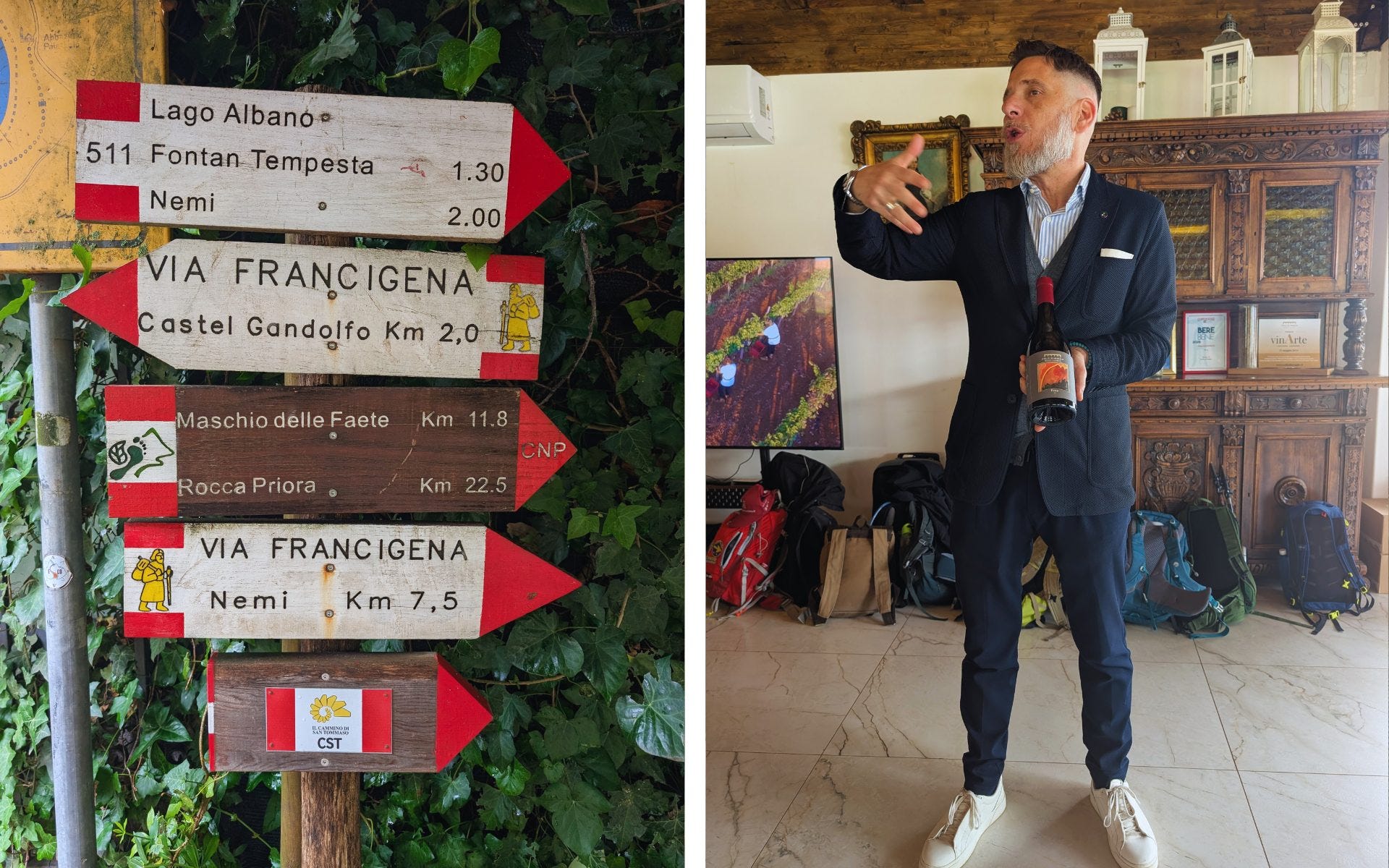
2025 marks a Jubilee year for the Church, the last one being 2000. To mark the occasion, the Via has been on the receiving end of some updates and we enjoyed new wood-bark paths on our walk through the Appia Antica Regional Park, on the outskirts of Vatican city limits. The whole trail feels like an open-air museum, laden with the funerary towers, villa ruins and paved road that’s 300 years older than Jesus.
The Jubilee, combined with Leo’s ascension, means that pilgrim numbers will rise to around 35 million (over double the usual number). But it was only when we reached the inner city’s limits—having cut through its suburban ring of post-war concrete—that we met anyone else on the trail. Some were religious pilgrims, others simply saw the Via Francigena online and thought “Why not?”.
I met god-fearing Angelo, from the Czech Republic, at the crest of Monte Mario, Rome’s highest hill. These were his final reverent steps of an 18-day trip that began in Lucca, 220 miles (354 kilometers) north-west of Rome in Tuscany. We sat and he regaled me of the memorable foot-washing rituals that preceded dinner in some of the hostels he’d stayed in.
Your average Via-goer backpacks and stays in bunk-bed dorms, the likes you may have seen on Spain’s Camino de Santiago. We, though, were doing things in a rather more genteel manner: Bags were driven ahead to hotels and each meal was four-courses long. “But no one’s rubbed my feet!” I said, raising my eyebrows at Tullia.
There’s a wonderful painting by 19th-century Russian artist Vasily Raev—View of Rome from Monte Mario—that must have been created very close to this spot. What you realize, when comparing his 1845 view with today’s, is how little the landscape has changed. It’s still a low-lying city and, from a distance, remains largely a palette of stone and brick, cypress and pines. By walking to Rome, and watching it come into focus slowly, there’s a sense that you can appreciate its lineaments as if they were made of impressionist oils.
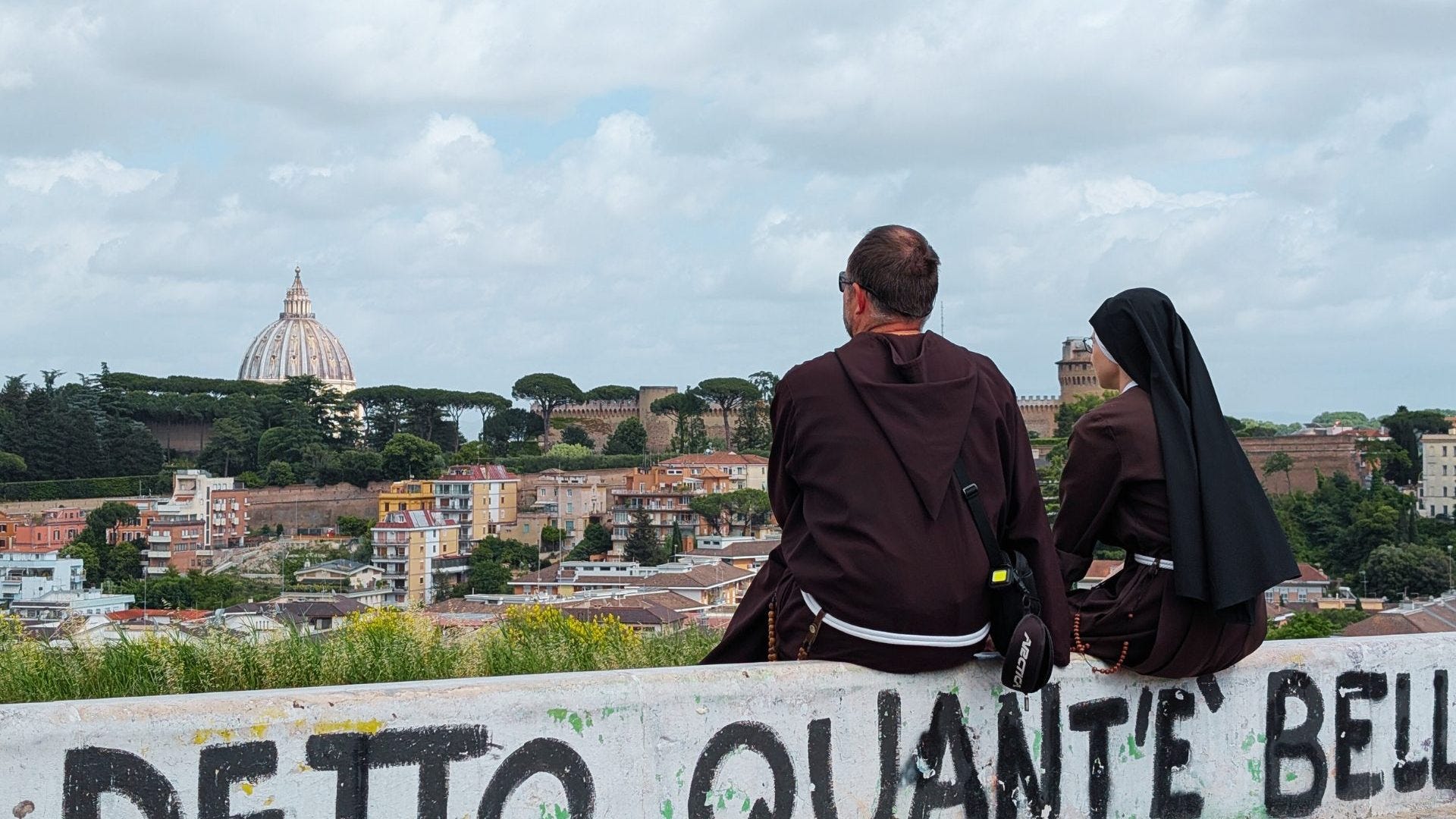
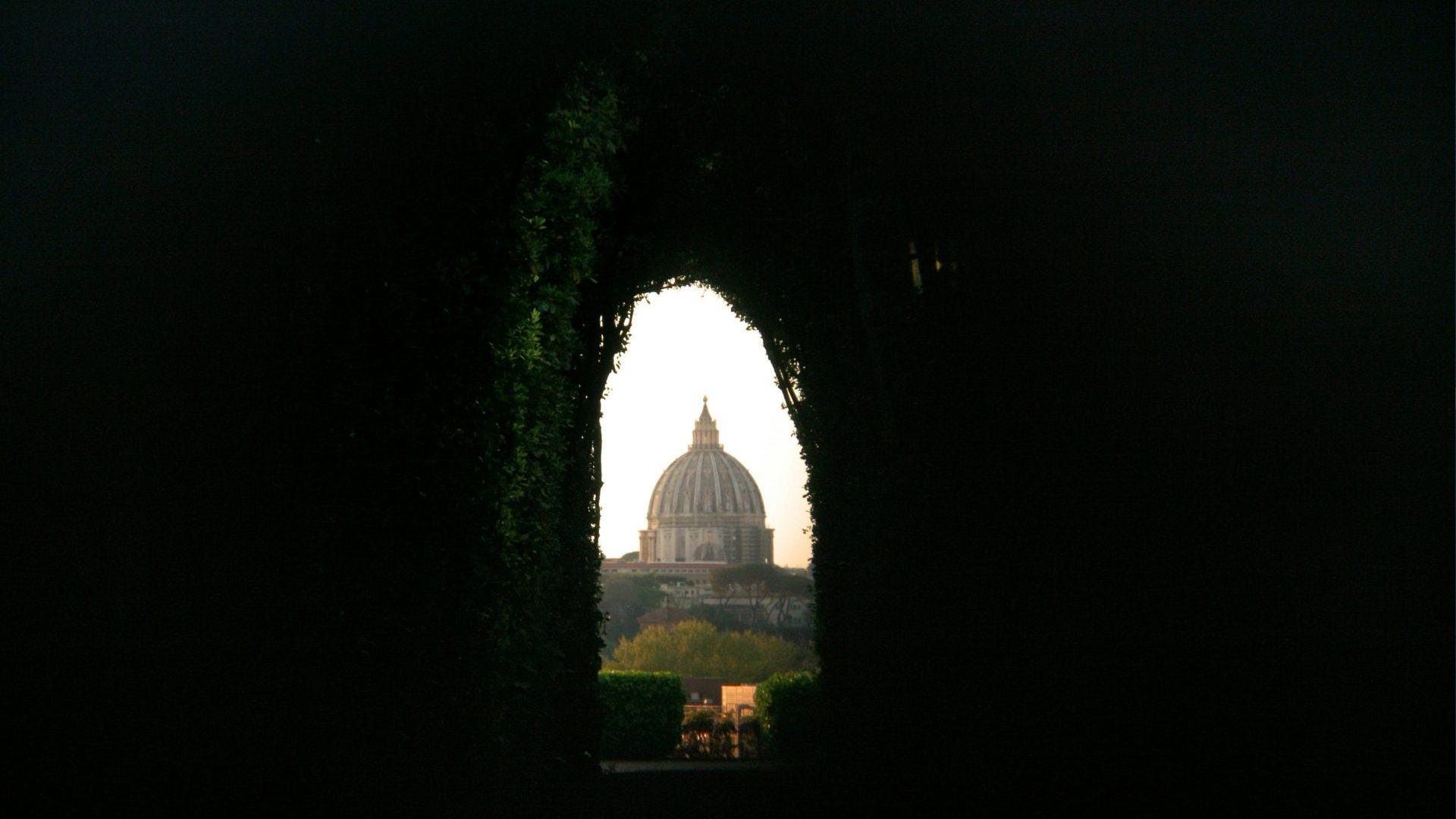
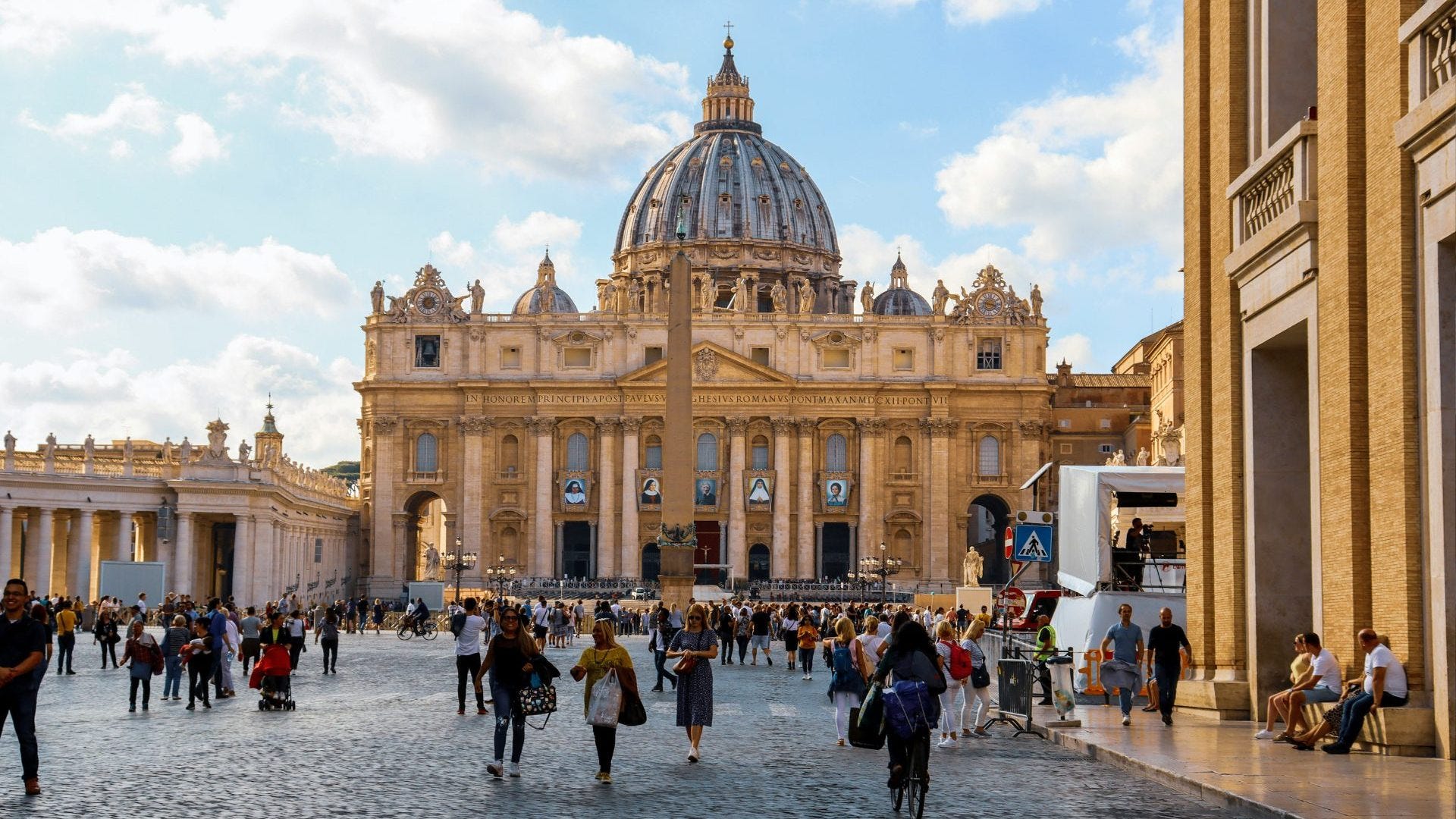
Our next viewpoint was my favorite: The Vatican, up close, but from behind. I’ve been a few times but, like most people, have always arrived on Mussolini’s Via della Conciliazone to a gauntlet of tourists and selfie-sticks. It’s enough to make you an atheist.
From our vantage, though, the coast was clear. A nun and monk sat together in what I hoped was a moment of forbidden love. The concrete step below them graffitied with: “Tell me how many times you have seen the sky above Rome and said, ‘How beautiful!’”. Nearby, a couple were having a picnic and smoking weed.
Immediately below is a bridge that once conveyed the sitting Pope to the Vatican by his own railway and station. Today, it’s a tourist-free footpath—and the final stretch of the Via Francigena. A walk through the railway tunnel towards the divine light and Rome proper.
Before arriving at St. Peter’s Square, we made a beeline for the Pilgrim’s Desk, where we were awarded a Testimonium. In medieval times, completing the Via Francigena could earn you a plenary indulgence (read: Get-out-of-Purgatory-free card). Today, alas, it’s just a pretty certificate.
“Right then, pilgrims,” said Tullia. “Ice cream?”