

The German capital has followed Copenhagen’s lead by rewarding visitors who take part in sustainable activities
“Today we’re going to build a corridor, so those lizards over there can make babies with these lizards over here.”
The last time I was in Berlin on a Sunday morning, I was sipping an espresso martini in Berghain – the world’s most famous nightclub – after an all-night rave. Last Sunday, I was standing beside a lake helping a conservationist improve the romantic prospects of the city’s resident reptiles.
I was there to try BerlinPay, a month-long pilot scheme that rewards visitors for taking part in a 30-strong list of sustainability-focused activities across the city. Help restore a wildlife habitat or join a litter pick and you might earn museum tickets, free entry to a lido or even a beer.
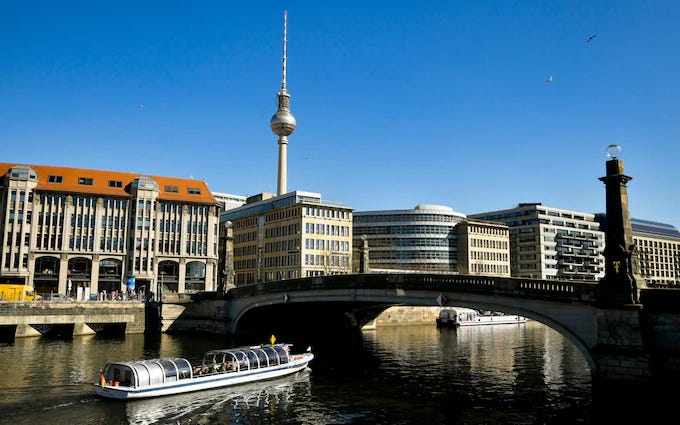
The initiative was inspired by Copenhagen’s CopenPay, which offers a similar do-your-bit-to-get-perks exchange and has just been turned into a permanent, year-round scheme. Berlin’s month-long test run, which ended on June 14, 2026, focused on the city’s lakes, rivers and canals, which organisers suggest are particularly vulnerable to increasing visitor numbers.
I caught a last-minute EasyJet flight over, booked the activities via the Visit Berlin website, and did my best to blag as much free stuff as possible.
Task one: helping lizards for a free swim
My first stop was Plötzensee, a delightful lakeside lido, hidden behind trees that shield it from the city. At one end of the beach, families were building sandcastles; at the other, a fenced-off section was reserved for nudists.
Waiting for me by the entrance was Florian Hepp, who has helped manage the site since 2019. Part of his job now involves maintaining the park’s wildlife habitats and hosting BerlinPayers, who exchange a couple of hours’ help for a free dip in the lake, usually costing €10 (£8).
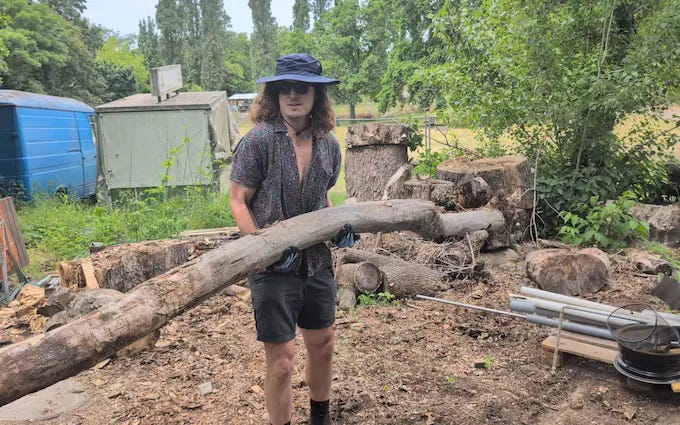
Our task that morning was the lizard corridor. Its purpose, to protect the local population – whose numbers are steadily improving – from hungry raccoons. “They kill everything!” said Hepp.
We loaded hefty logs into his 4x4, before laying them in the long grass around a nearby field. The logs would provide cover and safe passage between two lizard habitats, one of which happens to border some public loos.
“The dream is that when people go to the toilet they’ll see a little lizard!” Hepp said.
Two hours later, the corridor was complete, and I headed down to the water for my reward. Fun activity, interesting conversation, the inner glow of altruism, and now a dip in the sunshine. Good start.
Ahead of time, I made a point of finding restaurants that aligned with my moral mission and began with dinner in the pretty courtyard of Katz Orange, among the first in Berlin to evangelise seasonal ingredients and whole-animal cooking. I ordered the 12-hour pork shoulder and congratulated myself on the hardships endured in the name of ethical tourism.
Task two: ride a bike for free graffiti lessons
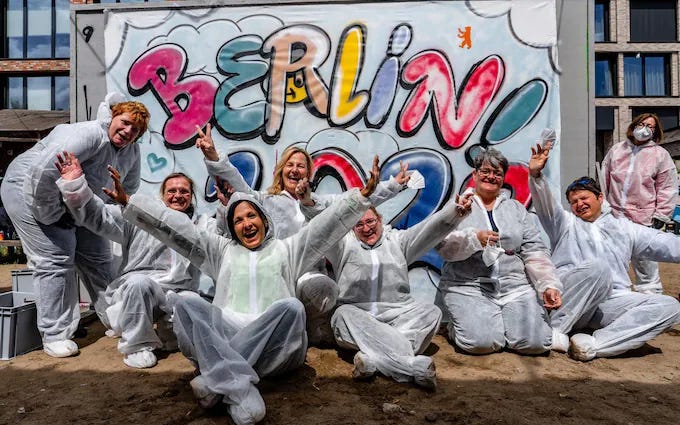
The following day took me to a triangle of concrete hemmed in by railway lines, the river Spree and Osthafen, a nightclub that once housed East Germany’s propaganda apparatus. A fitting location for a comfort-zone-stretching graffiti workshop. The payment for entry? Cycling there and back. Yep, that’s it.
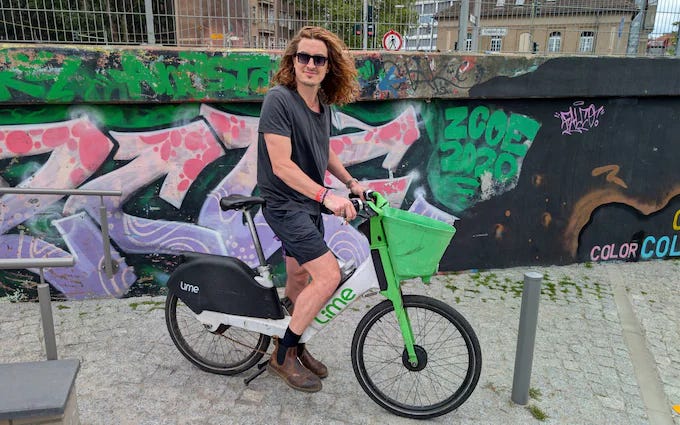
Duly, I turned up on a Lime Bike and was met by Hendrik Sander, founder of Urban Artists, who has been part of Berlin’s graffiti scene since he and his friends were decorating the other side of the still-standing Wall.
In the early days he’d been beaten and arrested. “You learn to make art quickly when you’re being chased,” he said with a boyish glint. Today, he’s commissioned to improve train stations and runs workshops to share what he considers one of Berlin’s defining art forms.
“The number-one rule is you can’t paint over somebody else’s work unless yours is better,” he said. “The city should continuously improve itself.”
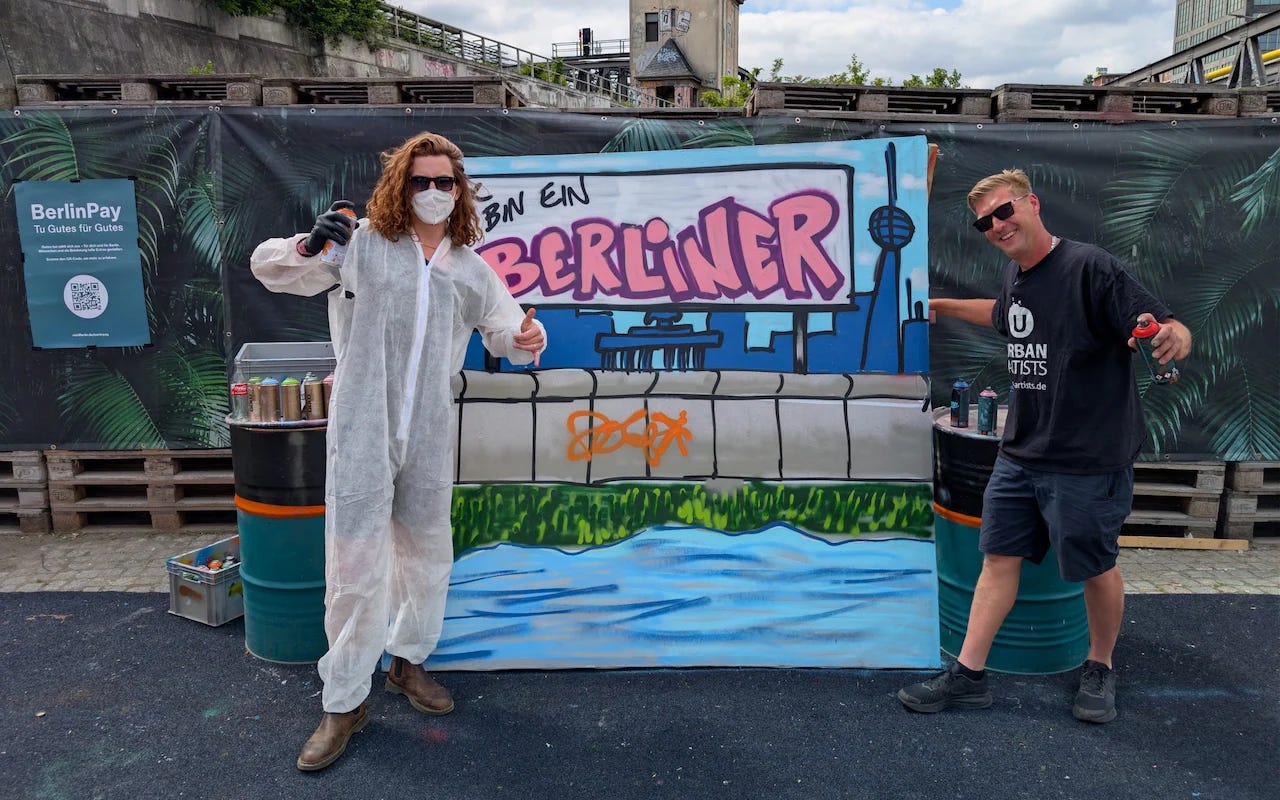
I fought my way into a boiler suit and we quickly settled on a design that combined the Berlin Wall, the Spree and JFK’s “Ich bin ein Berliner” catchphrase.
Sander kicked us off on a blank canvas in the sunshine, offering genuinely useful tips and, before long, I was creating smooth-ish lines and even fade effects. Again, no money exchanged hands and I had an experience I’ll be bragging about for the foreseeable future.
Lunch was a short cycle away at the Michelberger Hotel, where produce from the restaurant’s regenerative farm underpins a menu rooted in Wirtshausküche (hearty, German cooking). My “bit of everything” tray featured a wonderful beer-and-leek sausage, mash and obligatory sauerkraut.
Task three: pick up litter for free cookies and beer
The final of my three BerlinPay activities involved joining Michael Scheel in leafy Urbanhafen on one of his kayaking litter-picks along the Landwehr Canal. Michael usually spends his time running guided tours and team-building excursions. BerlinPay, he admitted, is something he does for free, simply because it’s a good idea.
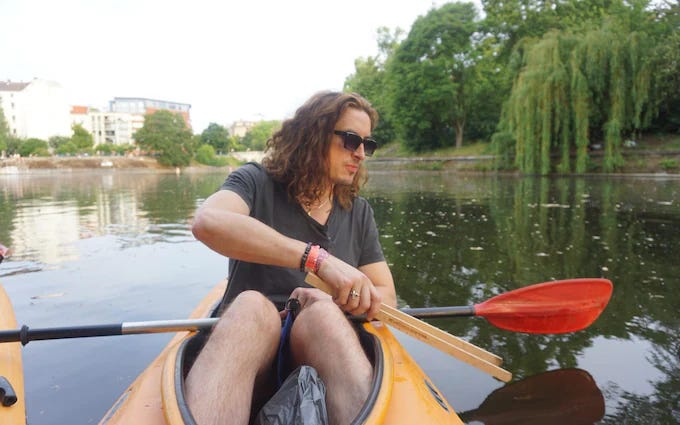
After a quick safety briefing, our multinational flotilla paddled along the canal, wooden litter-pickers at the ready.
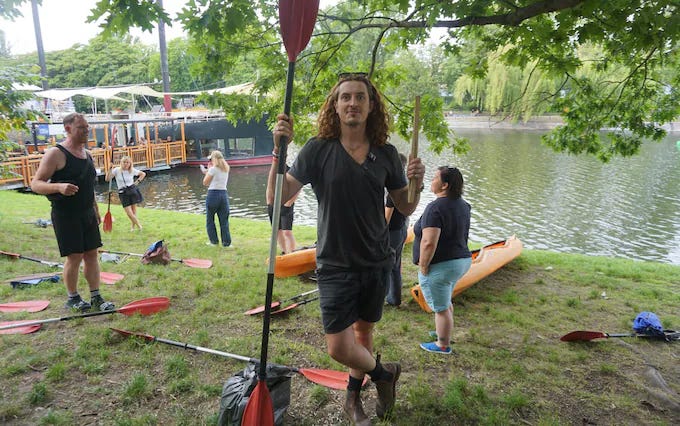
I asked Scheel about the strangest thing he had ever found. “A dildo,” he replied instantly, before adding that somebody had recently recovered a Bible, a Quran and a book on Freud from the same outing.
I’ve always found kayaking a little pedestrian, but combined with tracking and bagging litter, it was great fun. Golden hour turned the water coppery as we paused to hear Scheel’s potted history of the waterways. He then pointed out a family of nutria – think small beaver – whose presence, he assured us, was testament to how clean the water had become.
There wasn’t actually much rubbish to collect. I found a few bottles, some packaging and a bird feeder. A French couple in our group were delighted to retrieve a bra. A few hours after setting off, we arrived at Canoa Beach, a waterside bar in Neukölln and sat to enjoy cookies and our reward beer over sunset.
Dinner on my final evening was at Nobelhart & Schmutzig in Kreuzberg. Saving the smartest for last, I was ushered into a windowless room where the kitchen sits opposite counter seating, turning dinner into immersive theatre. Co-owner Micha Schäfer made the rounds and stopped to chat about his “brutally local” food philosophy. Each of his five bijou dishes came out with an earnest tale about the equally obsessive producer and I lapped it up.
As for BerlinPay, I sincerely hope it returns after this test run – and that more cities follow suit. It’s an absurdly good idea. Ostensibly well-organised and mutually beneficial, while being fun and easy. A sort of low-lift voluntourism, somewhere between a tourist-guilt donation and a fortnight at an elephant sanctuary.
The reward feels incidental. Contributing, however modestly, is the best bit. That small element of reciprocity subtly rewrites the city-break script, too: instead of the usual hotspot plod that only Dropbox remembers, you come away with proper anecdotes. “I built a lizard highway” certainly has a ring to it.