

Don’t know about you, but I need a glass of sherry and a plate of jamon.” The chef José Pizzaro makes no bones about his addiction to Spain’s celebrated acorn-fed jamon iberico as we arrive for a tour of the producer Cinco Jotas’s bodega. We’re in the sleepy little town of Jabugo, 70 miles northwest of Seville in the Sierra de Aracena and Picos de Aroche Natural Park. The first of Pizzaro’s two new restaurants open this week at the Royal Academy of Arts in London, so his quota of 500 hams a year (each worth in the region of £500) is going up.
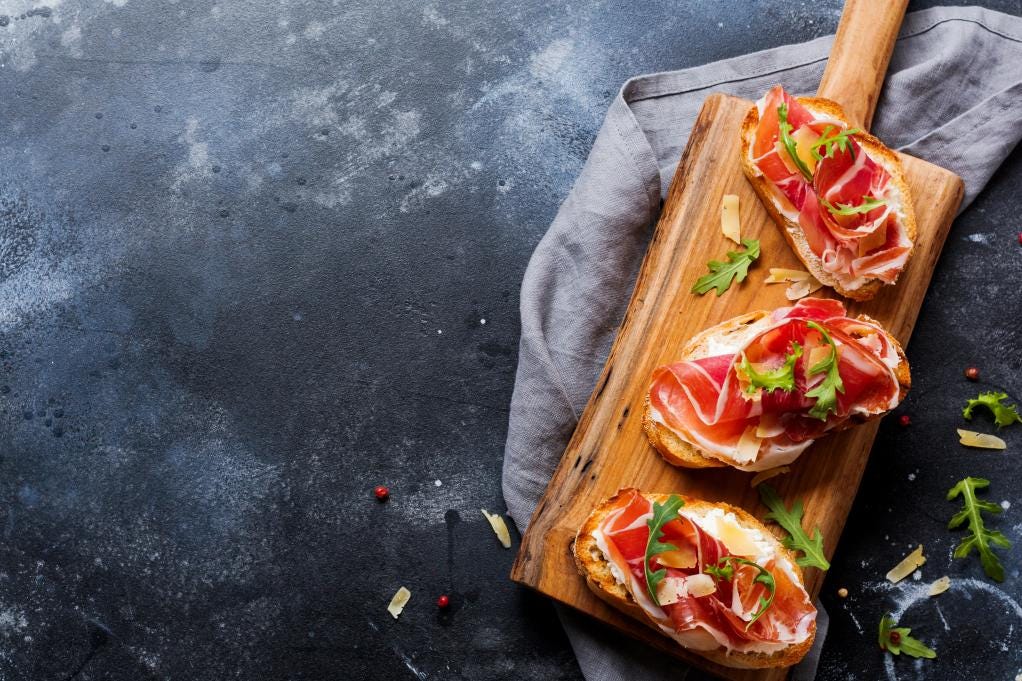
We start with a tasting. A complex profile of cheesy, nutty butteriness melts in my mouth, leaving an umami flavour that lingers longer than a good Scotch. It makes me pull embarrassing faces. The moreish saltiness complements the sherry — another proud Andalusian product.
“I’m cutting down on meat,” Pizzaro says as we tuck in. How often does he eat iberico ham? “Every day.” The pigs from which jamon iberico is produced are thought of by locals as “olive trees with legs”. The acorns they eat fill their flesh with omega-9 oleic acid, an unsaturated fat that lends their meat a distinctive gloss.

Cinco Jotas’s 140-year-old bodega has an unmistakably Andalusian character: high whitewashed walls that wrap around a Moorish-style courtyard garden. Down in its immaculate Roman-arch cellars hundreds of pata negra (so called because of the colour of the pigs’ hoofs) are hanging up, maturing for a minimum of three years before being shipped around the world. These hams are spoken of by those who work here in the same way that producers talk about Burgundy’s grand cru wines.
John Constable, had he ever left Britain to travel here, would have loved this countryside, with its goldilocks ecology and microclimate. The dry-stone walls and unkempt glades are the stuff of English pastoral settings. Unesco describes it as “a positive symbiosis between natural resources and human management”. A black vulture flies overhead as we walk through a meadow towards a farrow of little black oinking barrels with long legs and skinny ankles. Their chirpiness seems to indicate a level of contentment that assuages my carnivorous guilt.
We follow a few of them to the top of the hill where an old threshing floor offers views of the valley beyond. In comparison to the arid earth close to Seville, it’s dewy and verdant dehesa — a unique ecosystem made up of mixed grassy pastureland and woodland of evergreen oak trees. The mountains force passing clouds to empty, and so fig, walnut and cherry trees thrive alongside holm and cork oak, the source of our pigs’ fodder.
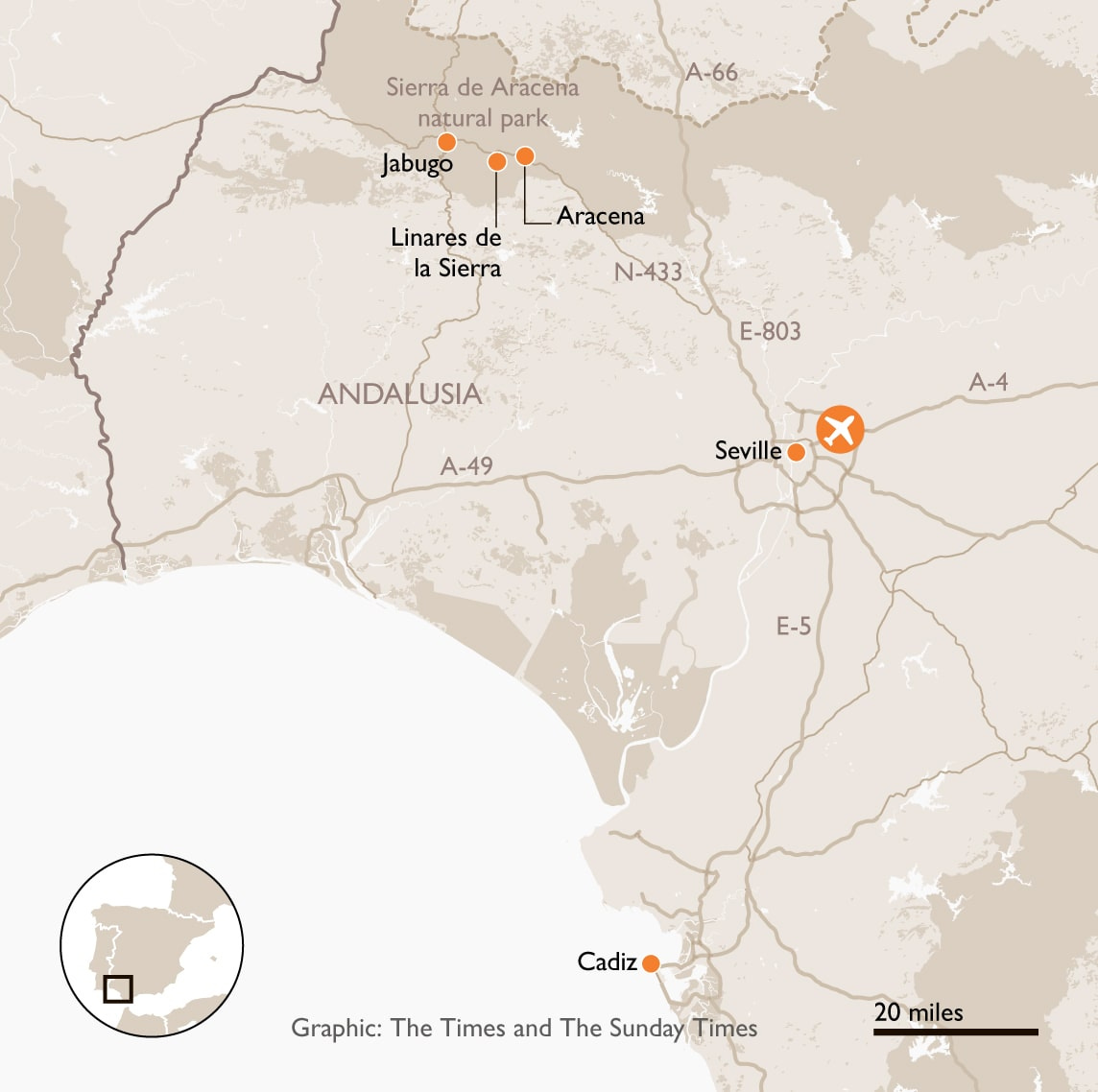
In autumn all these deciduous trees brush the landscape with coppery hues. “It’s a mushroom paradise around then,” Pizzaro says. “Chanterelles, ceps and gurumelo — all there for foraging.” It’s also festival season — the Feria del Queso (cheese) and Feria del Jamon take place in Aracena (though they have been cancelled this year). The town is a muddle of terracotta-topped white cubes ensconced in hills, and has a bijou Museo de Jamon too.
From the Hotel Convento Aracena — a charming converted 17th-century convent with a large pool — it’s a short, quiet walk to Plaza Marques de Aracena, the town’s social centre, where I sit for a local-vermouth aperitivo and a casual dinner. The wonderfully no-frills Manzano café-bar serves ham, of course, with salty fried potatoes and pickled veggies, along with some revelatory morcilla patatera — a sausage made with pork and mashed potato — on toast. In autumn it has a menu dedicated to mushrooms.
All the villages around here are joined by public footpaths, so I walk a little more than four miles to neighbouring Linares de la Sierra. The shady camino winds past orchards and vegetable gardens, and over one or two streams. Nostalgia in brick, Linares makes you pine for simpler times. When I return home, though, it’s the jamon I’m pining for.
Damien Gabet was a guest of Cinco Jotas (cincojotas.co.uk). B&B doubles at Hotel Convento Aracena from £83 (hotelconventoaracena.es). Fly to Seville